 EN
EN

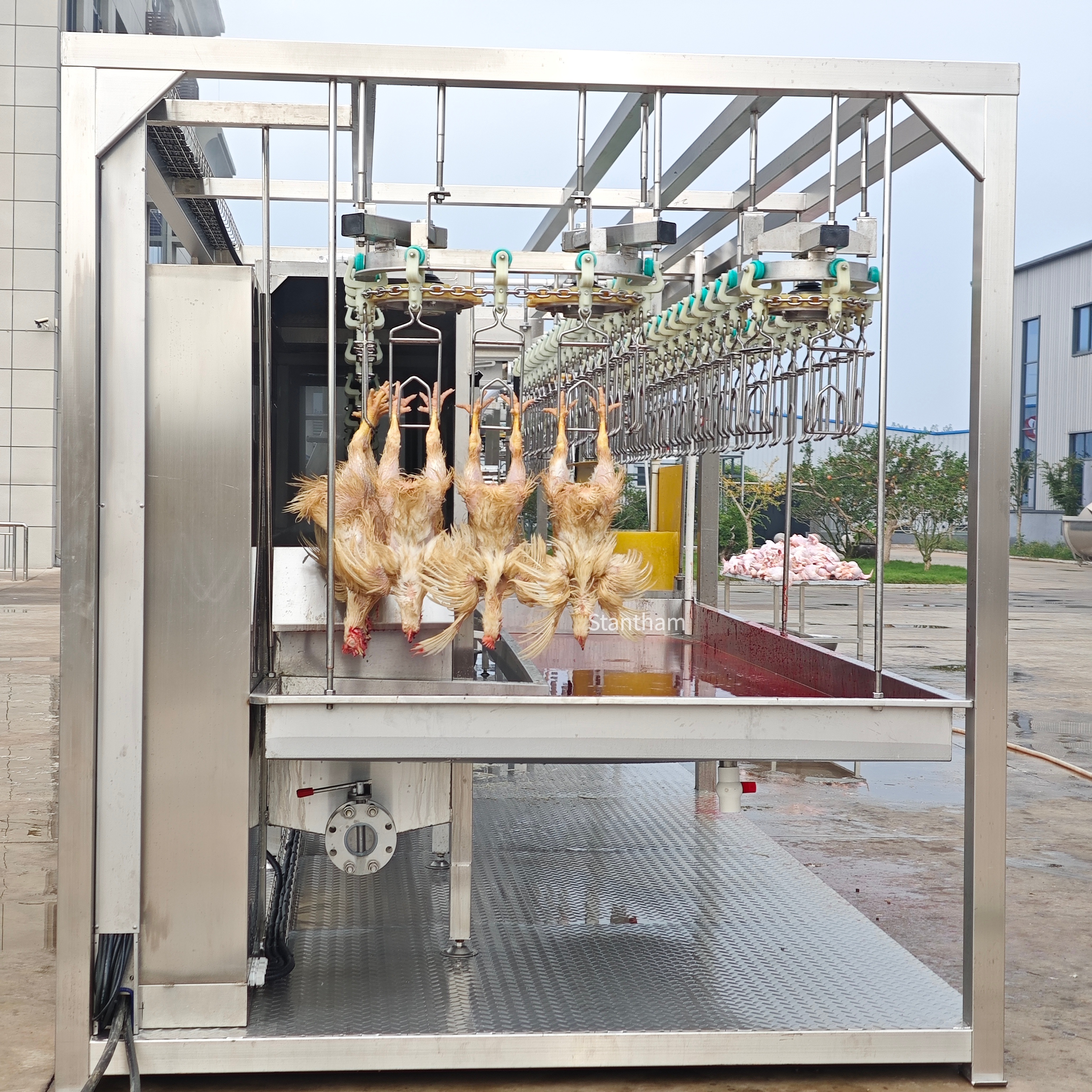
The Chilling Decision That Changes Everything
Chilling isn‘t the most glamorous step in poultry processing, but it might be the one that matters most for product quality. The choice between air chilling and water chilling affects everything from skin color and texture to cooked-meat yield and shelf life. And while water chilling remains the dominant method in the United States, air chilling is gaining ground—for reasons that go well beyond water conservation.
USDA research has shown that air chilling leads to better quality breast fillets and provides higher cooked-meat yields than immersion chilling. But the skin story is more nuanced. Air-chilled carcasses tend to have a different appearance—darker, more yellow, with more surface discoloration compared to water-chilled carcasses. Yet many premium poultry brands actively market air-chilled chicken as superior. What‘s going on?
How Water Chilling Changes the Skin
Water chilling involves submerging carcasses in tanks of cold water or ice slush. The process is fast—carcass temperature drops in about 55 minutes. But the speed comes with a trade-off: water absorption.
Water-chilled carcasses pick up moisture during chilling. Studies show absorption averaging 9.3% of pre-chill weight, with a range from 3.4% to 14.7%. That absorbed water doesn‘t all stay in the bird. After 24 hours of storage, almost 83% of the absorbed water in water-chilled carcass parts is released as purge.
The skin effects are immediate and measurable. Immediately after chilling, water-chilled carcasses are significantly lighter (higher L* value), less red (lower a), and less yellow (lower b) than air-chilled carcasses. That light, pale appearance is what many consumers associate with “fresh” chicken—but it’s partly an artifact of water absorption and dilution of natural pigments.
The Air Chilling Alternative
Air chilling exposes carcasses to cold moving air—typically around 0°C at 1.0 m/s. The process takes longer, about 155 minutes to achieve the same temperature reduction. During that time, carcasses lose moisture rather than gaining it. Air-chilled carcasses typically lose about 1.5% to 2.5% of their pre-chill weight.
The skin of air-chilled carcasses appears darker, more yellow, and shows more surface discoloration. One study found that air-chilled carcasses showed a notably yellow color (P < 0.05) compared to water-chilled groups. For some markets, that yellow color is a negative—it looks less “fresh.” For others, it signals that the bird hasn’t been waterlogged, and the natural fat and pigment haven‘t been diluted.
The skin texture difference is equally important. Air chilling doesn’t saturate the skin with water, so it remains firmer and tighter. When cooked, air-chilled chicken skin crisps up more readily because there‘s less surface moisture to evaporate before browning begins. Water-chilled skin, by contrast, can feel flabbier and take longer to achieve the same crispness.
The Water Retention Paradox
Here’s where it gets counterintuitive. Water-chilled birds absorb water, which might seem like a yield advantage—more weight to sell. But that absorbed water mostly comes out during storage and cooking. Water-chilled carcasses show the highest moisture loss during cutting—2.5% compared to 0.3% for air-chilled. After 24 hours of storage, air-chilled and evaporative air-chilled carcasses maintain weights close to pre-chilled weights, while water-chilled carcasses have released most of what they absorbed.
The net effect? The apparent yield advantage of water chilling largely disappears by the time the product reaches the consumer. And the cooking yield actually favors air chilling. Cook yield for fillets deboned from water-chilled carcasses was significantly lower than fillets from air-chilled carcasses.
Shelf Life and Microbial Ecology
Recent research has uncovered another dimension to the air-versus-water question. A 2021 pilot study found that air chilling resulted in superior chicken odor and shelf life, especially prior to 14 days of dark storage. The study also demonstrated that air chilling produced a more diverse microbiome, which may delay the dominance of Pseudomonas—the primary spoilage organism in packaged meat products.
This finding matters because spoilage isn‘t just about food safety—it’s about waste. Longer shelf life means less product discarded at retail and less shrink for the processor. For a large operation, even a one-day extension in shelf life can represent significant value.
The Economics of Water Savings
Water consumption is a powerful driver of the shift toward air chilling. It takes an average of seven gallons of water to process each chicken, and switching to air chilling can save a minimum of one-half gallon per bird. For the 9 billion birds processed annually in the United States, that translates to potential savings of about 4.5 billion gallons of water per year.
In regions where water is expensive or scarce, this economic argument is compelling. A techno-economic analysis highlighted potential economic advantages to air chilling compared to water chilling in facility locations where water costs are more significant than energy costs.
Which Method Wins?
The answer depends on what‘s being sold. USDA research suggests that immersion chilling is better for whole birds and skin-on parts, while air chilling is acceptable for deboned and further processed items—fillet color, marination yield, and tenderness are not affected, and cook yield is actually improved.
For plants selling whole birds with skin, the darker, more yellow appearance of air-chilled carcasses can be a disadvantage. For plants producing skinless fillets or further-processed products, the improved cook yield and longer shelf life of air chilling are clear advantages.
A Case from the Field
A large processor in the western United States recently converted one of its lines from water chilling to air chilling. The primary driver wasn‘t quality—it was water availability. The plant was facing increasing water costs and regulatory pressure to reduce discharge volumes. After the conversion, the plant documented a 0.6-gallon-per-bird reduction in water usage. Skin color changed noticeably—the air-chilled birds had a slightly more yellow tone—but the processor’s retail customers, who were buying primarily skinless breast fillets, didn‘t object. Cooked-meat yield improved by just over 1%, which translated into meaningful annual savings.
The lesson? The right chilling method depends on the product mix, the water economics, and the market’s expectations. There‘s no universal winner—only the right fit for a specific operation.