 EN
EN
The Economics of Every Gram Left Behind
In poultry processing, waste isn‘t just the stuff that goes to rendering. It’s the edible meat left on the frame after evisceration, the organs damaged during extraction, the carcasses downgraded because of contamination, and the labor spent fixing what the machine didn‘t get right. On average, about 30% of a bird’s live mass is lost during processing—removing visceral organs, feathers, and blood. But within that 30%, there‘s wide variation between plants running outdated equipment and those running modern evisceration systems.
A study examining broiler processing found that eviscerated yield typically ranges from 67% to 75% of live weight, with much of the difference attributable to processing methods. That 8-point spread represents millions of dollars in annual revenue for a large-scale operation.
Precision Extraction: The Mechanical Logic Behind Less Waste
The core challenge in evisceration is removing the viscera package completely without damaging edible organs or contaminating the carcass. Manual evisceration is inconsistent—skill varies by operator, fatigue sets in, and speed pressures encourage shortcuts. Automated evisceration equipment solves this through mechanical consistency.
Modern eviscerators use spring-loaded spoon mechanisms that adapt to different bird sizes while ensuring complete and accurate viscera removal. This adaptability matters because flock weights vary. A system that requires frequent manual adjustment for different bird sizes will inevitably produce more variation—and variation means waste.
The Maestro Eviscerator, one of the most widely used systems in the industry, can process varying flock sizes without frequent manual adjustments. The result is minimal waste, enhanced liver quality, and a higher percentage of properly presented organ packs for inspection. That last point is critical—organs that aren‘t properly presented often get rejected, turning a potential revenue stream into waste.
Yield Protection Through Reduced Organ Damage
Liver damage is one of the most visible forms of evisceration waste. A damaged liver can’t be sold for human consumption—it goes to pet food or rendering at a fraction of the value. The same applies to hearts, gizzards, and other edible offal.
Advanced evisceration equipment reduces organ damage through:
-
Controlled spoon positioning that follows the natural curvature of the cavity
-
Gentle extraction force that avoids tearing
-
Precise cutting that separates the viscera package cleanly from the body wall
The Nuova-i eviscerator, for example, uses intelligent control to efficiently separate viscera packs from the carcass, resulting in uniform and compact packs. Compact packs are less likely to suffer damage during transfer to inspection stations. One operator noted that improved viscera pack separation made the process much cleaner—intestines hang out less, reducing soiling and cross-contamination risk.
Contamination Reduction: The Waste That Never Makes It to the Scale
Contamination waste is different from yield loss. Yield loss is about meat that could have been sold but wasn‘t. Contamination waste is about meat that gets condemned and never reaches the market.
Fecal contamination during evisceration is a primary driver of carcass downgrades. When the intestinal tract is damaged during extraction, contents can spill onto the surrounding meat. The result is trimming, condemnation, or at best, a downgrade to a lower-value product category.
Modern evisceration equipment addresses this through design features that prevent intestinal damage. The compact washing station at the machine outlet significantly reduces the risk of fecal contamination. Some systems also include high-pressure water jets for automatic cleaning, ensuring reliable operation over extended periods. Cleaner equipment means cleaner carcasses, and cleaner carcasses mean less waste.
Data-Driven Optimization: The Intelligence Layer That Compounds Savings
The most sophisticated evisceration systems today don‘t just remove organs—they collect data about every cycle. The Baader evisceration line includes integrated data-capturing devices that enable real-time production monitoring and optimization. Operators can make data-driven adjustments on the fly, improving throughput and minimizing downtime.
What does this mean for waste reduction? It means that when a flock comes through with different size characteristics, the equipment can adjust rather than forcing operators to guess. The Nuova-i remembers successful recipe settings for specific flock characteristics—operators can recall those settings with a single tap. This eliminates the trial-and-error period that typically accompanies flock changes, reducing the waste generated during the adjustment window.
Real-World Impact: A Case from a High-Capacity Operation
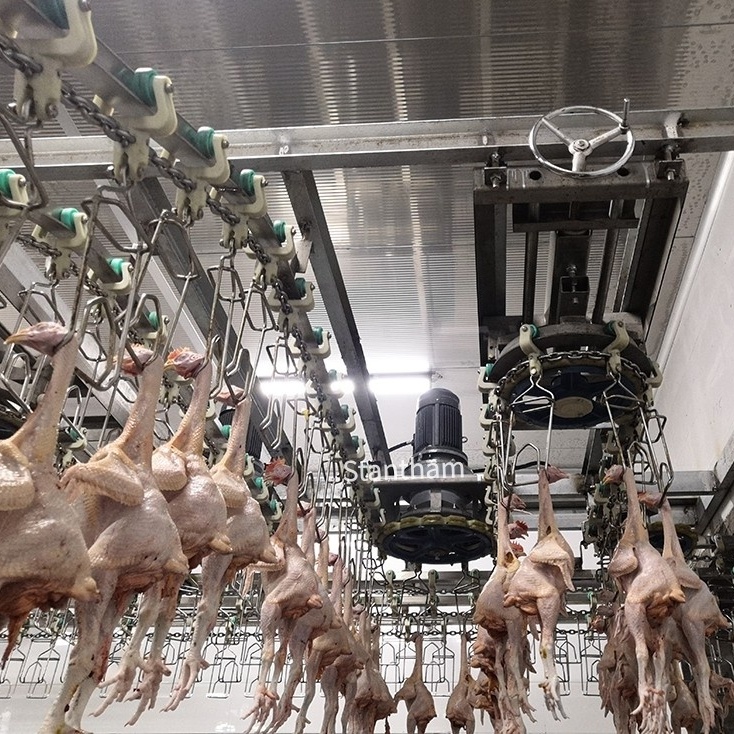
A 15,000 birds-per-hour facility in Chengde, China, placed special attention on optimizing the evisceration process. The operation uses a transfer unit to move carcasses from the defeathering line to the evisceration line, with an overhead conveyor equipped with Active Tension Control to precisely monitor both speed and chain tension. Carousel machines handle the initial vent cutting and opening operations before the eviscerator carefully extracts the viscera pack.
What’s notable about this setup is the integration of giblet harvesting—nearly all giblets are destined for human consumption. That‘s not accidental. When evisceration is clean and precise, more organs are suitable for the human food chain, and less ends up as byproduct. The plant’s management recognized that optimizing evisceration wasn‘t just about throughput—it was about capturing value from every part of the bird.
The Trade-Offs Worth Acknowledging
No system is perfect, and evisceration equipment has its limitations. High-capacity systems require significant capital investment, and the payback period depends on volume and current waste levels. For smaller operations, the ROI may not justify the expenditure. Additionally, even the best equipment requires regular maintenance to maintain precision—worn spoons or misaligned cutters will gradually increase waste until they‘re addressed.
There’s also the question of product mix. Plants focused primarily on whole birds have different evisceration requirements than plants producing cut-up products. The optimal equipment configuration depends on what‘s being sold.
The Bottom Line on Evisceration Waste
Waste in evisceration isn’t inevitable—it‘s a function of equipment precision, maintenance discipline, and operational data. The gap between a plant running legacy equipment and one running modern, data-enabled evisceration systems can be several percentage points of yield. For a facility processing 100 million birds annually, that gap translates into tens of millions of pounds of additional saleable product.
The technology exists to close that gap. The question is whether the operation is ready to invest in it—and more importantly, in the discipline required to maintain it.
Table of Contents
- The Economics of Every Gram Left Behind
- Precision Extraction: The Mechanical Logic Behind Less Waste
- Yield Protection Through Reduced Organ Damage
- Contamination Reduction: The Waste That Never Makes It to the Scale
- Data-Driven Optimization: The Intelligence Layer That Compounds Savings
- Real-World Impact: A Case from a High-Capacity Operation
- The Trade-Offs Worth Acknowledging
- The Bottom Line on Evisceration Waste