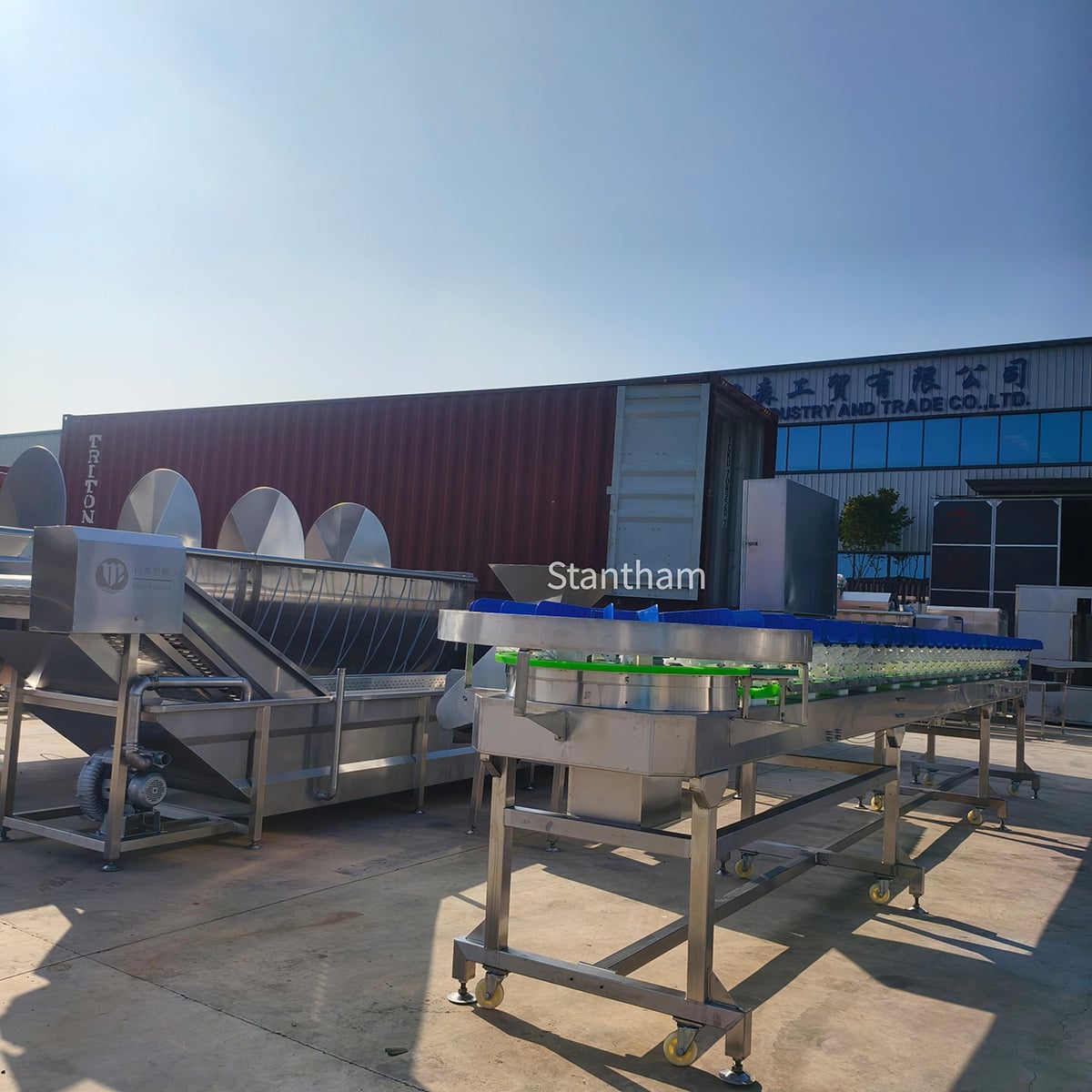
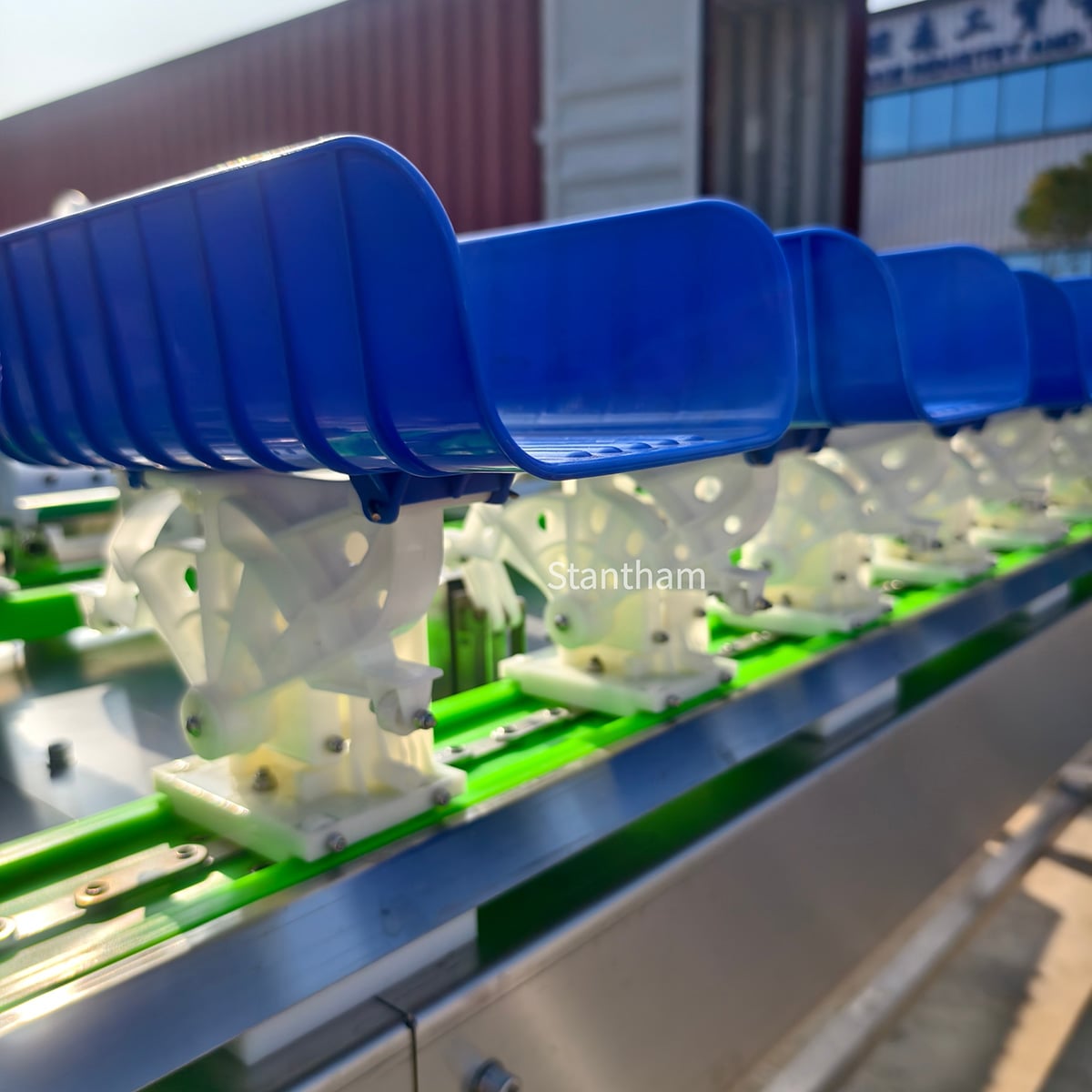
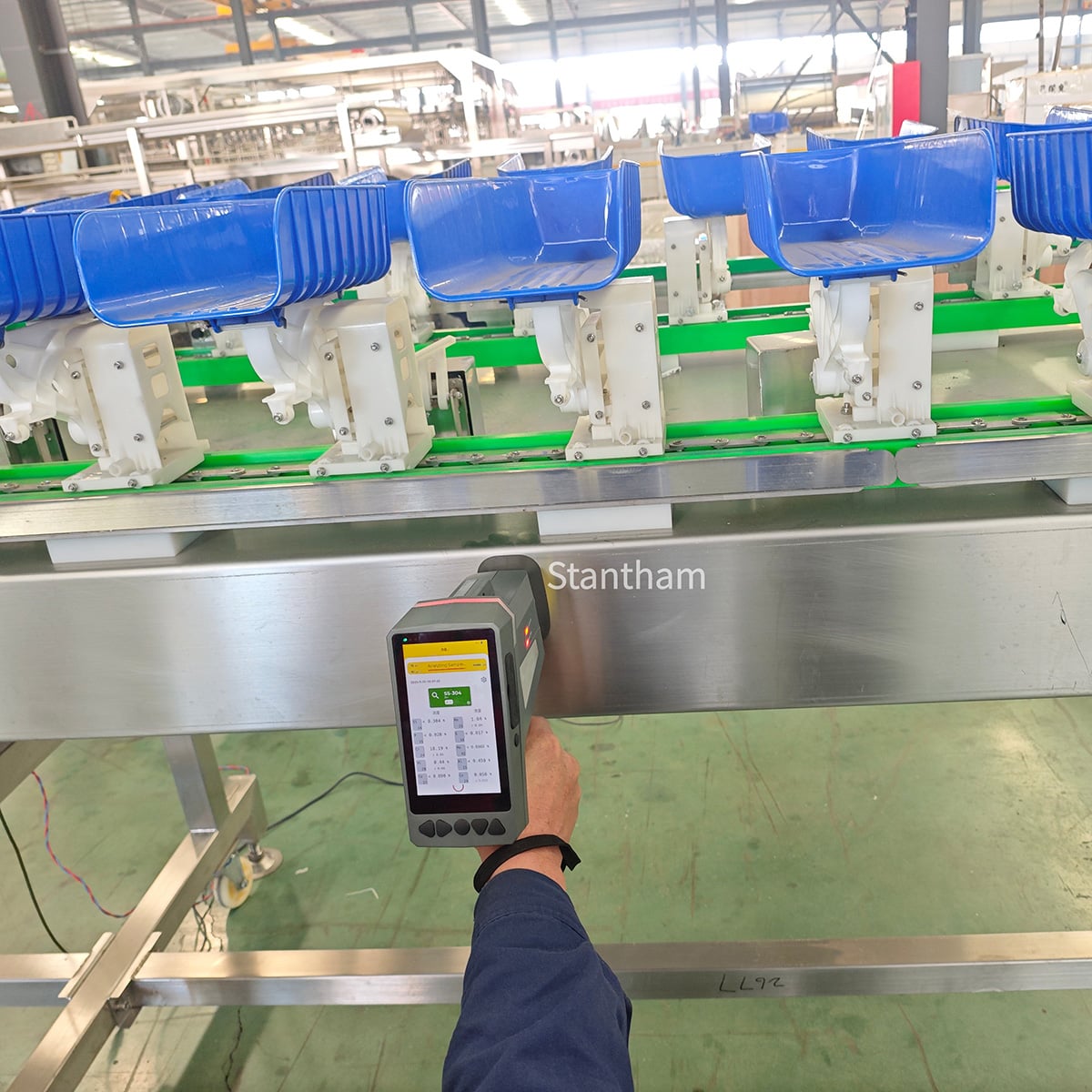
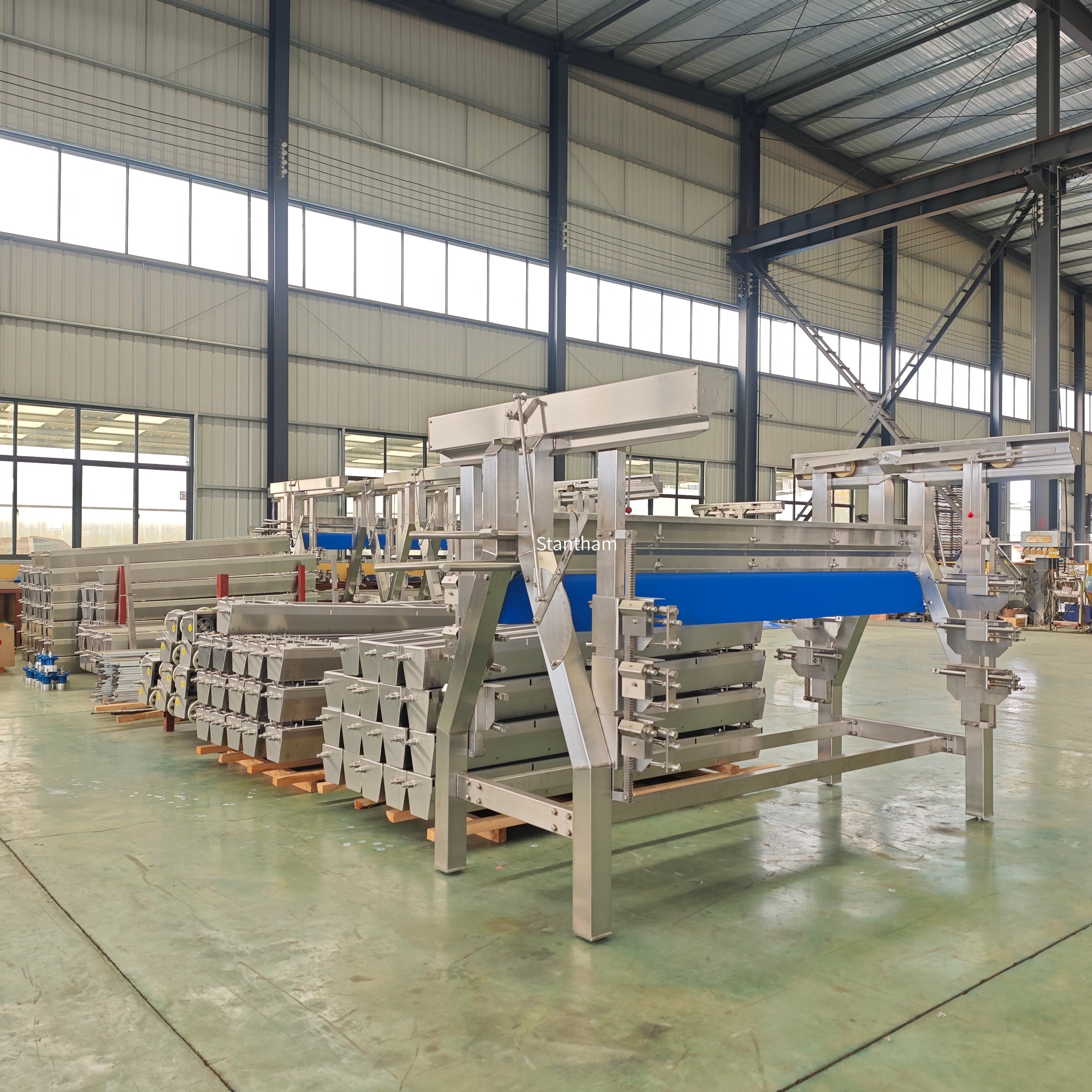
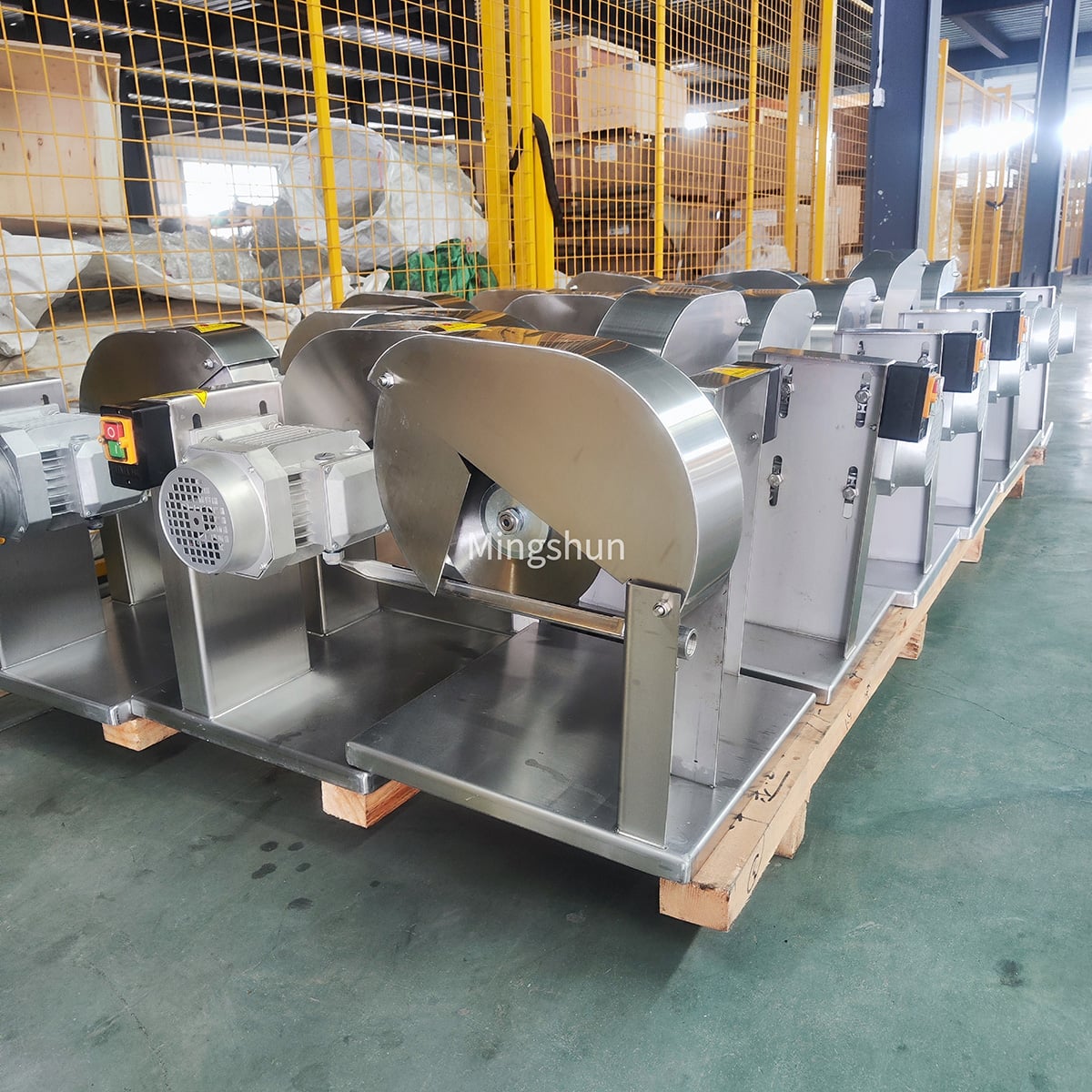
Our box-type weight grading machine is a professional automatic weighing and sorting system designed for poultry cut parts. It performs online dynamic weighing of products such as chicken breasts, drumsticks, wings, feet, and duck cuts, automatically classifying them into 6 to 18 preset weight grades at speeds of 180 to 320 pieces per minute. Featuring a METTLER TOLEDO weighing sensor, an independently developed rejector, and full solid-state relay circuitry, the machine delivers high precision, low failure rates, and long service life. It reduces manual labor, improves product standardization, and supports intensive, automated production in poultry slaughterhouses and processing plants.
In poultry processing, weight grading is far more than a simple sorting task—it directly impacts product value, customer satisfaction, and operational efficiency. A chicken breast that falls outside the specified weight range might be rejected by a fast-food chain buyer. A tray of drumsticks with inconsistent sizes creates a poor retail presentation. Manual grading, where workers judge weight by hand or use static scales, is slow, error-prone, and labor-intensive. Our box-type weight grading machine automates this entire process with a design focused on speed, accuracy, and reliability.
The machine operates on a continuous, in-line basis. Products are placed into individual boxes or carriers that move along the conveyor system. As each box passes over the weighing station, a precision load cell captures the weight in real time. This happens while the product is moving—a process known as dynamic weighing, which is technically more challenging than static weighing because vibrations and conveyor motion can introduce errors. Our machine overcomes this with a sophisticated weighing algorithm that filters out mechanical noise and captures an accurate weight reading within milliseconds.
The weighing sensor is the heart of the system, and we have chosen METTLER TOLEDO, a globally recognized leader in weighing technology. Sensors from this brand are known for their high sensitivity, excellent linearity, and long-term stability. In a processing plant where the machine runs for ten or twelve hours a day, sensor drift would be a disaster—weights would gradually become inaccurate, and product would be misclassified. The METTLER TOLEDO sensor holds its calibration, providing reliable performance shift after shift, month after month.
Once the weight is captured, the control system determines which grade the product belongs to—based on the preset parameters you define. The product then travels to the appropriate rejector station, where a precisely timed mechanical arm pushes it into the correct collection chute. Our rejector is independently designed and manufactured in-house, a choice that gives us direct control over quality and reliability. After extensive field testing, we have refined the rejector mechanism to operate smoothly with minimal jams or misfires. The result is a very low failure rate and a longer service life for the entire machine.
The electrical control system also reflects our commitment to durability. Traditional relays have mechanical contacts that wear out over time, especially in a production environment with frequent switching. We use solid-state relays (SSRs) throughout the machine's control circuitry. SSRs have no moving parts, meaning no contact wear, no arcing, and no degradation from mechanical fatigue. They are also more resistant to shock and temperature variations. This choice alone dramatically extends the electrical system's lifespan and reduces the frequency of control panel maintenance.
The machine delivers sorting speeds of 180 to 320 pieces per minute, depending on the product type and configuration. Sorting precision is rated at ±1 gram, which is a remarkable level of accuracy for dynamic, in-motion weighing. For context, many static scales used in manual grading cannot match this level of precision, especially when used quickly under production pressure. The machine can be configured with 6 to 18 grading levels, giving you the flexibility to sort products into as many weight categories as your market requires—whether that is three size grades for retail or twelve precision grades for further processing.
Parameter |
English Specification |
Sorting Speed |
180-320 pieces per minute |
Grading Levels |
6-18 levels (customizable according to needs) |
Sorting Precision |
±1g |
Applicable Products |
All kinds of chicken and duck cut parts (chicken breast, chicken drumstick, chicken mid-joint wing, chicken foot, duck mid-joint wing, duck wing root, duck gizzard, duck foot, etc.) |
Working Mode |
Online dynamic weighing, automatic grading, automatic data statistics and storage |
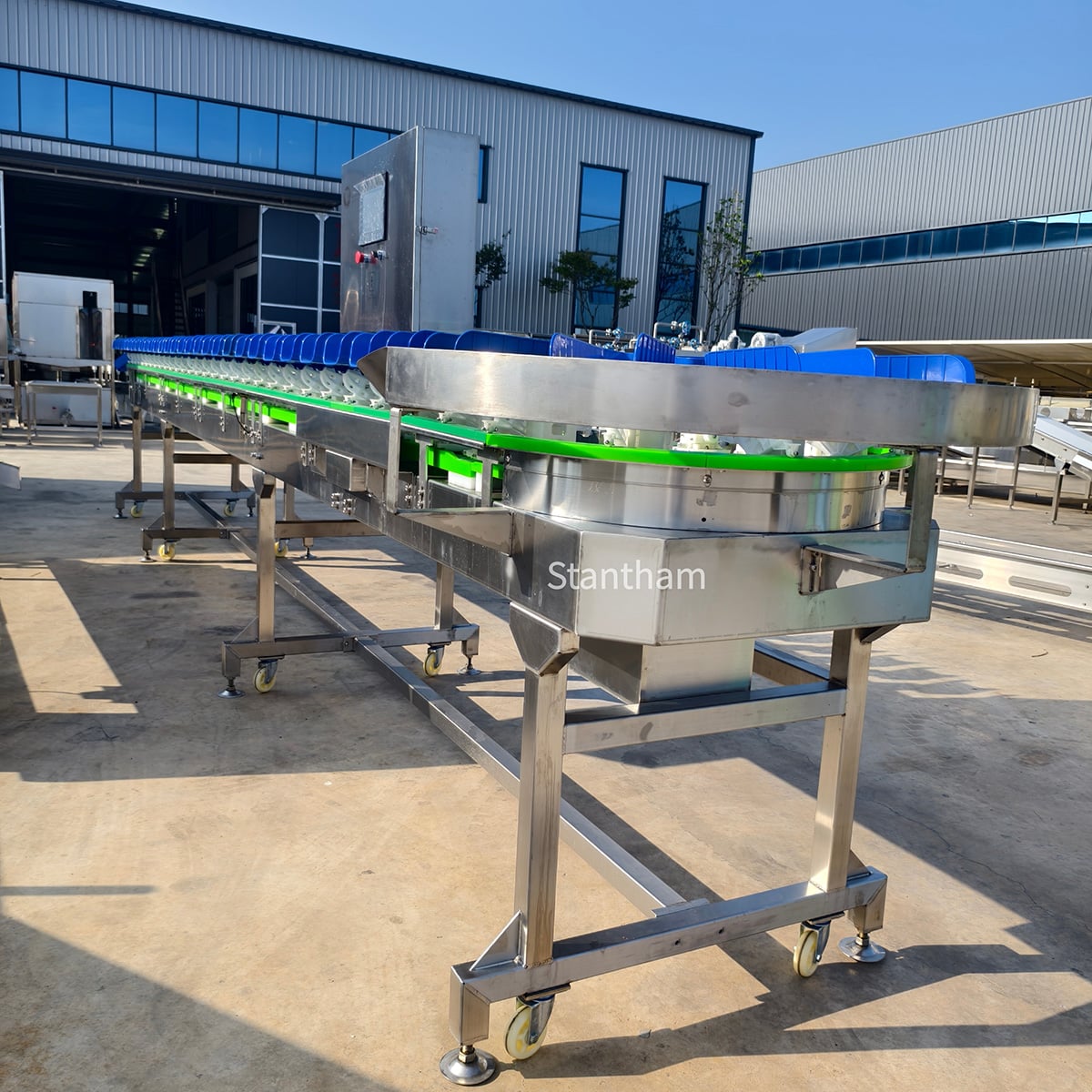
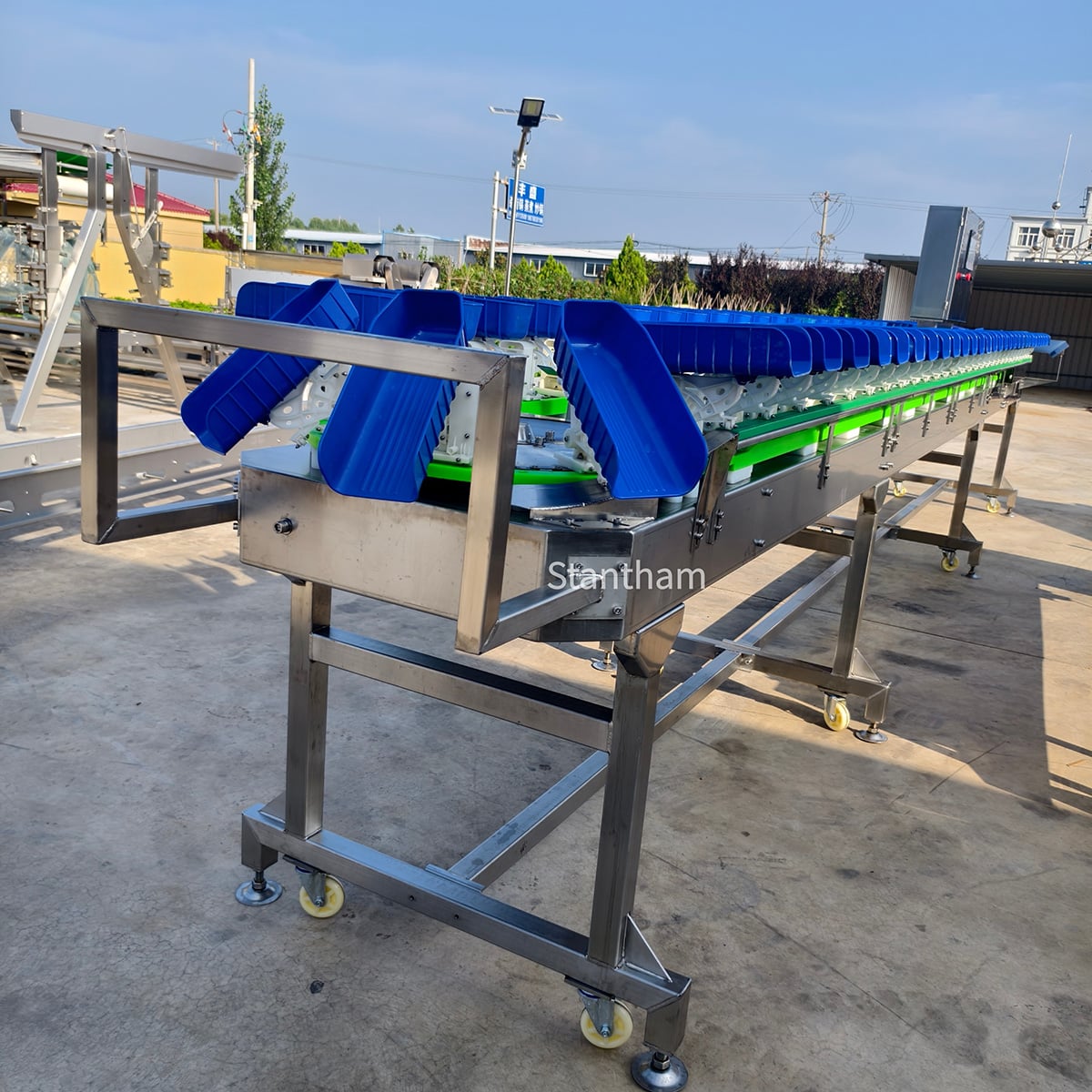
1. Core Components of Top Quality for High Precision and Durability
— The key weighing sensor, a critical part of the machine, adopts the top brand METTLER TOLEDO from Germany. With high sensitivity, strong anti-interference ability and stable performance in long-term operation, it lays a solid foundation for accurate weighing.
2. Independently Developed Rejector with Low Failure Rate and Long Service Life
— The rejector is independently developed and customized by our factory. After long-term on-site test and optimization, it has a reasonable structure and smooth operation, with extremely low failure rate and longer service life of the whole machine, effectively reducing downtime for maintenance.
3. Full Solid-State Relays for Ultra-Long Service Life
— All the circuit control parts of the whole machine adopt solid-state relays, which have no mechanical contact wear, strong impact resistance, high temperature resistance and are not easy to be damaged. Compared with traditional relays, their service life is greatly improved, making the equipment operation more reliable.
4. High Sorting Speed and Precision
— The machine operates at a high speed with efficient grading performance. At the same time, it is equipped with accurate weighing algorithms and stable hardware, ensuring high sorting precision and small grading error, which can meet the needs of large-batch continuous production lines.
The box-type weight grading machine delivers practical value across a range of poultry processing environments, from specialized further-processing plants to integrated slaughter operations.
In a chicken further-processing plant that produces portioned products for retail and food service, weight grading is a daily necessity. Consider a line producing chicken breasts for a major grocery chain. The retailer specifies that each breast must weigh between 180 and 200 grams. Breasts under 180 grams go to a different product line; those over 200 grams are sold separately as jumbo portions. Manual grading of thousands of breasts per hour requires a large team of workers with scales, working under constant time pressure. Mistakes happen—an underweight breast ends up in the premium pack, leading to customer complaints and claims. A heavy breast goes into the value pack, giving away product and eroding margins. Our machine eliminates these errors. Running at 250 pieces per minute, it sorts every breast with ±1 gram accuracy, ensuring that each package contains exactly what the label promises. This precision reduces give-away, protects margins, and builds retailer confidence in your consistency.
The machine is equally valuable in duck processing operations, where products like duck gizzards and duck feet command premium prices in certain export markets, but only when sorted into strict weight grades. Export buyers often reject entire containers if weight sorting is inconsistent. Our machine's ability to handle the full range of duck cuts—from mid-joint wings to gizzards, from wing roots to feet—gives duck processors a single piece of equipment that covers their entire product portfolio.
For smaller poultry operations that process a few thousand birds per day, the machine provides a path to professionalization. Many smaller processors still use manual grading, believing that automation is only for large plants. But the labor savings from even a modest-speed configuration—180 pieces per minute—can pay for the machine within months. Consider a plant producing 2,000 chicken feet per hour for a local marinated products factory. Manual grading of those feet into four weight grades would require four workers, each handling and weighing continuously. The machine replaces them with a single operator who manages the system, freeing those workers for other tasks and reducing the plant's exposure to labor shortages and turnover.
The machine also offers valuable data collection capabilities. As products are graded, the system records weight data for each grade, allowing plant managers to track yield trends, identify shifts in product size distribution, and make informed decisions about flock management or processing parameters. This data visibility is increasingly important for facilities pursuing certifications like BRC or IFS, where traceability and process control are key audit requirements.
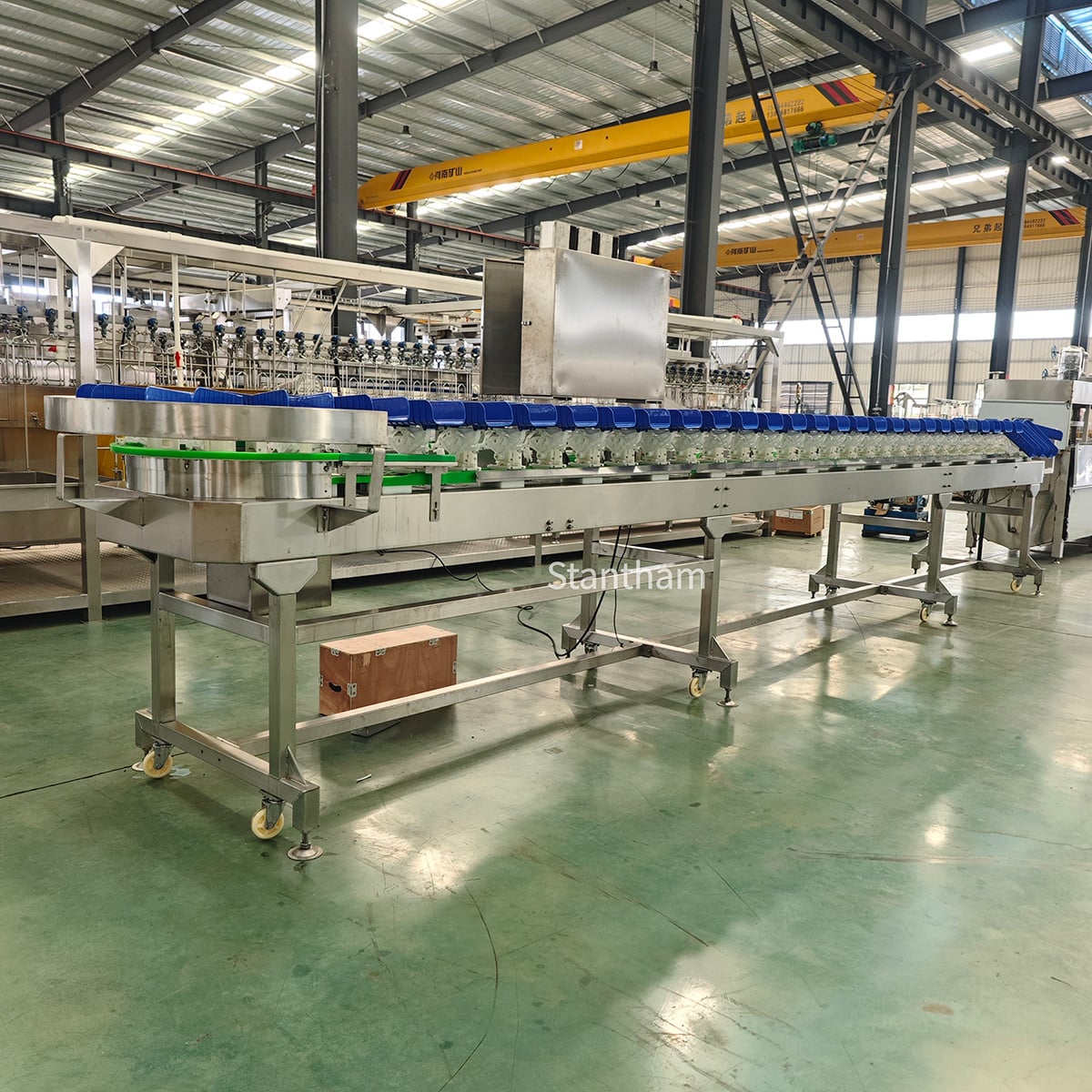
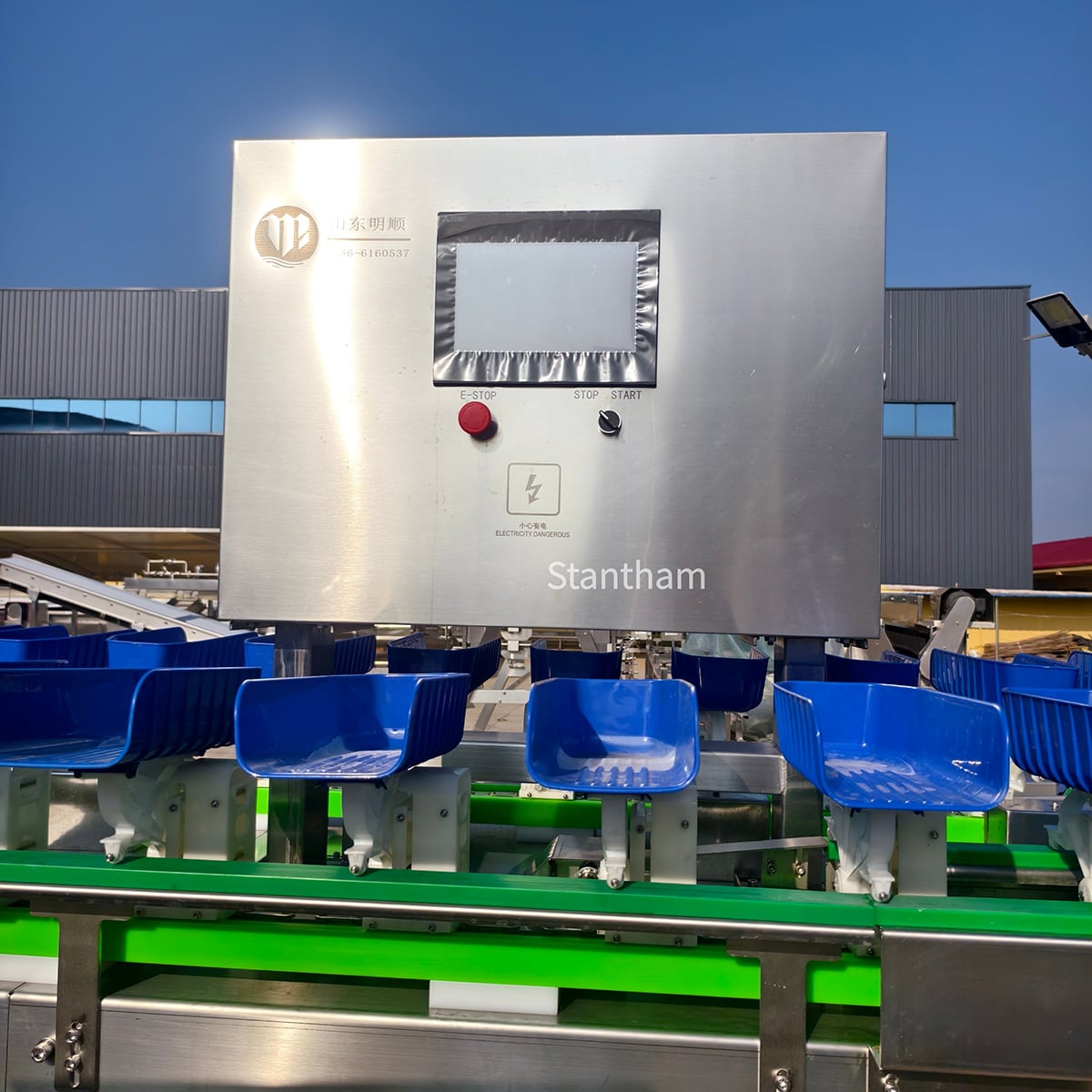
 EN
EN