 EN
EN
The Batch Mindset and Its Limits
Batch processing in poultry slaughter has a long history, and for good reason. It's straightforward, requires less sophisticated controls, and the capital investment to get started is relatively modest. Birds arrive, they get processed in groups, and the line stops between batches for cleaning, maintenance, or simply because the next truck hasn't arrived yet.
But batch processing carries a hidden cost that doesn't show up on the equipment quote. Every start-stop cycle wastes energy. Every batch transition creates idle time for operators and equipment. And perhaps most significantly, batch processing makes it difficult to maintain consistent product quality from one batch to the next because conditions—scalding temperature, line speed, operator fatigue—drift between cycles.
In rendering operations, batch equipment typically makes sense when daily throughput is below a certain threshold. Below that level, the capital cost savings of batch equipment outweigh the operational efficiency advantages of continuous systems. But as throughput increases, the calculus shifts. Continuous equipment gains absolute advantages in energy consumption, labor costs, and product stability.
What Continuous Flow Actually Changes
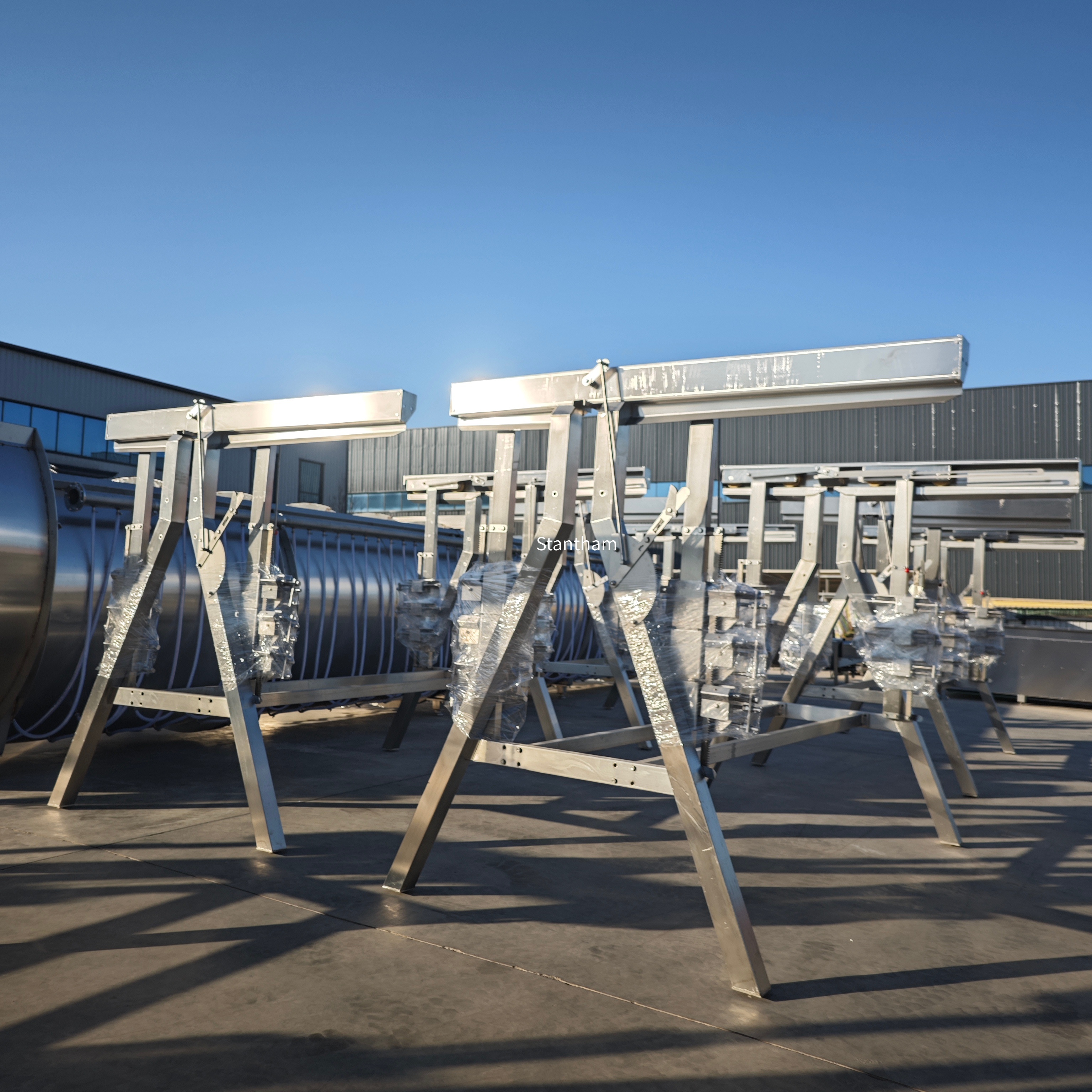
Continuous-flow poultry processing eliminates the gaps between batches. Birds move through the line in a steady stream, with each station processing at a constant rate. The overhead conveyor doesn't stop. The scalder maintains a stable temperature. The pluckers run at a consistent speed. The evisceration line operates without the rhythm disruptions that come with batch starts and stops.
This sounds simple, but the implications run deep. A continuous line can be tuned to a specific throughput and then left to run. Operators focus on monitoring and quality control rather than constantly adjusting for the next batch. The equipment experiences less thermal cycling—the scalder isn't heating up from cold between batches, and the chillers aren't dealing with sudden surges of warm product.
The productivity gains come from multiple sources, but the biggest ones are reduced downtime between batches, more consistent product quality (which means less rework and fewer rejects), and better labor utilization. Instead of operators standing around during batch changeovers, they stay engaged with the continuous flow.
A Real-World Look at the Transition
A poultry processor in the Midwest made the switch from batch to continuous flow about eighteen months ago. The operation had been running a batch-style line for nearly a decade, processing around 80,000 birds per week across five production days. The batch setup required about 45 minutes of downtime between each run for cleaning and resetting. With six batches per day, that added up to four and a half hours of non-productive time daily—nearly a full shift's worth of lost capacity every week.
The transition to continuous flow didn't happen overnight. The facility was retrofitted in phases, starting with the scalding and plucking sections, then the evisceration line, and finally the chilling system. The supplier provided on-site engineering support throughout the installation and commissioning. The first week of continuous operation was rocky—the line speed had to be dialed back while operators got accustomed to the new rhythm. But by week three, the line was running at its target throughput with significantly less operator intervention than the batch line ever required.
The productivity improvement wasn't just about throughput. The continuous system produced more uniform carcass quality. Scalding temperature stayed within a tight range because the system wasn't cycling up and down between batches. The evisceration team reported fewer tear-outs and less variation in finished product appearance. These quality gains translated directly into higher yields and fewer downgrades.
The Energy and Labor Picture
Energy consumption tells a clear story. Batch systems lose heat between cycles—the scalder cools down, the building cools down, and everything has to be reheated for the next run. A continuous system running at steady state maintains its operating temperature throughout the production day. The difference can be substantial, especially in colder climates where ambient temperatures pull heat out of the facility during downtime.
Labor is where the gains are often most visible. A continuous line requires fewer people per bird processed because the work is distributed evenly across the shift. There are no surges of activity when a new batch starts, no lulls when it ends. Operators can work at a sustainable pace rather than alternating between frantic activity and downtime.
In the Midwest operation mentioned earlier, the plant reduced its processing crew by about 15 percent while increasing total throughput. The remaining operators reported less physical strain because the work was steady rather than bursty. Turnover, a persistent problem in poultry processing, dropped noticeably in the months following the transition.
The Quality and Yield Angle
Product quality improvements from continuous flow are harder to quantify but no less real. When a batch line starts up, the first birds through the scalder may not get the same treatment as the last ones. Temperature drifts. Operator attention wanes toward the end of a batch. These variables introduce inconsistency that shows up in the finished product.
Continuous flow eliminates much of this variability. The process parameters stay constant because the system is designed to maintain them that way. The result is more uniform scalding, more consistent feather removal, and cleaner evisceration. For a processor selling to retail or foodservice customers who demand tight specifications, this consistency has real value.
Yield improvements also appear. Less variation in scalding means less skin damage. More consistent evisceration means fewer torn intestines and less contamination. These small improvements per bird add up across thousands of birds per day. The yield gain might be only a fraction of a percent, but on a high-volume line, that fraction represents meaningful dollars at the end of the year.
| Performance Metric | Batch Processing | Continuous-Flow Processing |
|---|---|---|
| Daily productive runtime | ~75-80% of shift | ~90-95% of shift |
| Scalding temperature variation | ±2-3°F between cycles | ±0.5°F steady-state |
| Labor requirement per 1,000 birds | Higher (batch changeover labor) | Lower (steady workflow) |
| Product consistency | Variable between batches | Uniform throughout run |
| Energy efficiency | Moderate (thermal cycling) | Higher (steady-state operation) |
When Continuous Flow Doesn't Make Sense
For all its advantages, continuous flow isn't the right answer for every operation. Facilities processing fewer than a certain number of birds per day may find that the capital cost of a continuous system outweighs the operational benefits. The equipment is more expensive, the controls are more sophisticated, and the maintenance requirements are different.
There's also the question of bird supply. Continuous flow works best when birds arrive in a steady stream. If supply is irregular—if birds come in batches from multiple farms with variable schedules—the continuous line may end up waiting for birds, which defeats the purpose. In those cases, a well-designed batch system with efficient changeovers might actually outperform a continuous line that's constantly starved for input.
The decision isn't binary. Some operations run a hybrid approach—continuous flow through the primary processing stages (stunning through evisceration) and batch-style handling for secondary processing and packaging. This allows them to capture the quality and energy benefits of continuous flow where they matter most while maintaining flexibility in the downstream operations.
Making the Upgrade Work
The transition from batch to continuous flow is as much about people as it is about equipment. Operators trained on batch systems need time to adjust to the different rhythm of continuous production. Maintenance crews need to learn new procedures—continuous systems have different failure modes and different preventive maintenance schedules.
The operations that succeed with the upgrade are the ones that invest in training alongside equipment. They bring operators into the commissioning process, let them run the line under supervision, and give them time to develop the new muscle memory. They also maintain realistic expectations—the first week of continuous operation won't be as smooth as the tenth week, and that's normal.
The productivity gains from continuous-flow poultry processing are real, but they don't come automatically. They require the right equipment, the right installation, the right training, and the right operational discipline. For operations that get those pieces right, the payoff shows up in throughput, quality, and the bottom line.
Zhucheng Stantham Industry & Trade Co., Ltd. provides poultry processing solutions that span the full range from batch-style lines to fully continuous systems, with engineering support that helps facilities navigate the transition regardless of where they start.