 EN

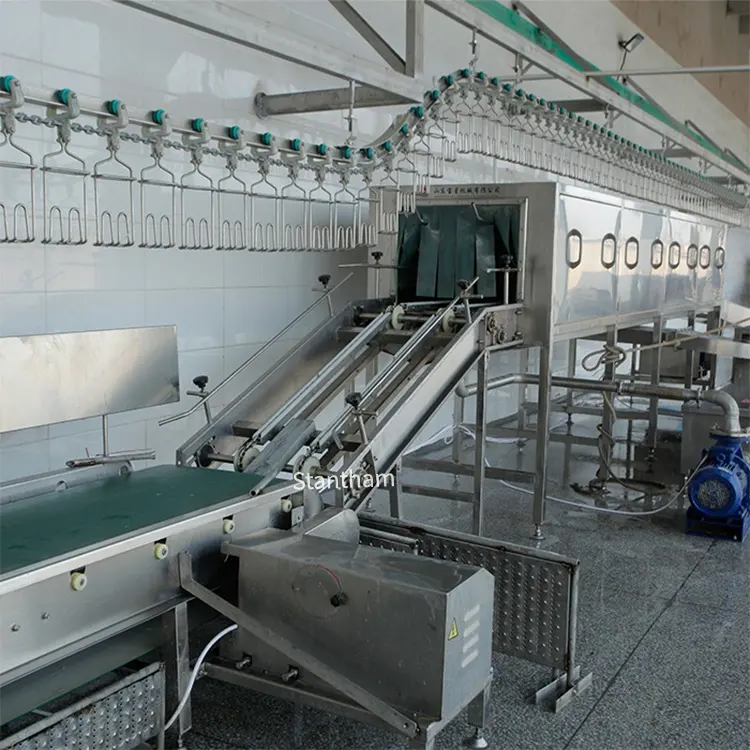
Corrosion Resistance: Why Galvanized Slaughtering Equipment Fails in Humid Conditions
In slaughtering facilities, persistent humidity, frequent hot-water washdowns, and condensation create an aggressive environment that quickly overwhelms the protective zinc layer of galvanized equipment. While the zinc coating is designed to act as a sacrificial anode, the sustained moisture and elevated temperatures typical of food-processing zones often accelerate degradation far beyond laboratory estimates.
Galvanized coating breakdown under sustained tropical humidity and condensation
Galvanized steel depends on a continuous zinc layer to shield the underlying carbon steel from moisture. In tropical or high-condensation settings, however, water can become trapped between the coating and the metal—or pool on horizontal surfaces—creating ideal conditions for localized corrosion. FM Global’s field data indicates that such trapped-water conditions can cause galvanized piping failures in as little as 12–36 months. The problem intensifies at temperatures exceeding 60 °C, where a polarity reversal occurs: zinc no longer cathodically protects the steel but instead accelerates its corrosion. High humidity and heat promote the formation of zinc oxide and zinc hydroxide, destabilizing the coating and exposing bare steel to humid air and standing water. Once the zinc is locally depleted, rust spreads rapidly beneath the remaining coating, leading to deep pitting and structural weakening long before visual signs appear.
Accelerated degradation from chlorides in washdowns, saline air, or processing residues
Chloride ions from cleaning agents (e.g., hypochlorite-based sanitizers), coastal air, or animal protein residues aggressively attack galvanized coatings. Even low concentrations penetrate the zinc layer and initiate pitting corrosion on the underlying steel. A 2023 TÜV study on corrosion-prone components reported that 14% of galvanized samples failed a 700-hour neutral salt spray test due to rapid zinc depletion. In a slaughtering plant—where daily washdowns combine moisture, chlorinated chemicals, temperature swings, and mechanical abrasion—the coating’s sacrificial properties are exhausted well ahead of design life. The result is pinpoint rusting that expands into craters, compromising hygienic surfaces and creating bacterial harborage points. Unlike controlled lab tests, real-world conditions make galvanized equipment a recurring maintenance liability in humid, washdown-intensive operations.
Stainless Steel Superiority: Grades, Passive Film Stability, and Hygienic Performance
Optimal stainless steel grades (304 vs 316) for humid, food-grade slaughtering equipment
Selecting the correct stainless steel grade is foundational for slaughtering equipment longevity in humid environments. Grade 304, often called “18/8,” provides good general corrosion resistance and remains suitable for structural supports or low-exposure areas. However, humid slaughtering facilities introduce aggressive factors like frequent high-pressure washdowns and saline processing residues—conditions that expose equipment to chlorides, a primary cause of pitting corrosion.
Grade 316 stainless steel offers a critical upgrade. Its chemical composition includes 2–3% molybdenum, which significantly enhances resistance to chlorides and pitting. This makes 316 the optimal choice for critical, continuously moist components such as conveyors, cutting tables, and evisceration equipment. While 304 may suffice in less exposed applications, the superior corrosion resistance of 316 directly prevents contamination risks and surface degradation. Choosing 316 for core slaughtering equipment is a strategic decision that ensures enduring hygienic performance against the relentless attack of moisture and chlorides.
Self-repairing chromium oxide layer under continuous moisture exposure
The unparalleled hygiene of stainless steel equipment stems from its self-defending surface—a passive film of chromium oxide only a few nanometers thick that forms naturally when chromium reacts with oxygen. Crucially, this film is self-repairing. In the event of a scratch or abrasion during operation, the exposed chromium immediately reacts with ambient oxygen or moisture from washdown water to reform the protective oxide layer. This autonomous renewal prevents rust and maintains a non-porous, cleanable surface—essential for withstanding constant moisture and mechanical wear. Unlike coated surfaces that fail catastrophically once breached, the passive layer’s regenerative capacity ensures corrosion resistance and hygienic integrity without manual intervention, directly supporting food safety over the equipment’s full service life.
Real-World Environmental Stressors: Humidity, Salinity, and Thermal Cycling in Slaughtering Facilities
Slaughtering equipment endures relentless environmental attacks that accelerate material degradation. The combination of high humidity, corrosive salts, and extreme temperature swings creates a uniquely aggressive environment—particularly damaging to vulnerable materials like galvanized steel.
- Humidity and condensation arise from frequent washdowns with high-pressure hot water and steam sanitation. Ambient moisture levels remain persistently high, promoting rust and undermining protective coatings.
- Salinity infiltrates through chlorides found in processing residues (blood, brine solutions) and, in coastal plants, airborne salt spray. These compounds penetrate galvanized zinc layers, triggering rapid pitting corrosion.
- Thermal cycling occurs as equipment surfaces alternate between hot cleaning cycles and chilled processing rooms. This repeated expansion and contraction flexes coatings, causing cracking and delamination that exposes base steel.
Such constant stress compromises both structural integrity and hygiene—underscoring the need for inherently corrosion-resistant materials in slaughtering environments.
Total Cost of Ownership: Lifespan, Maintenance, and Food Safety Implications for Slaughtering Equipment
Zero-maintenance durability of 316 stainless steel versus recurring galvanized recoating or replacement
Choosing equipment based solely on purchase price overlooks Total Cost of Ownership (TCO), which includes acquisition, maintenance, downtime, and disposal costs over a system’s life. In slaughtering environments, the contrast between 316 stainless steel and galvanized steel is stark. Galvanized equipment may cost ~30% less upfront—but that advantage erodes quickly. The zinc coating degrades in humid, chloride-rich washdown atmospheres, leading to red rust within 3–5 years. The true cost then includes abrasive blasting, recoating, and production halts for installation—a recurring cycle of expense. Downtime due to premature failure in food processing can cost over $10,000 per hour in lost productivity. In contrast, 316 stainless steel’s molybdenum-enhanced alloy delivers a permanent, self-repairing passive layer that requires no surfacing or painting for a 25+ year service life. When factoring in unplanned downtime, labor, and rework, the one-time investment in 316 eliminates a chain of operational and financial risks—making lifecycle value, not upfront price, the decisive factor for high-moisture slaughtering equipment.
FAQs
Why does galvanized equipment fail in humid environments?
The protective zinc coating on galvanized equipment deteriorates rapidly in humid conditions due to sustained moisture, high temperatures, and trapped water, leading to accelerated corrosion.
What are the benefits of 316 stainless steel in slaughtering facilities?
Grade 316 provides superior corrosion resistance against chlorides and high humidity. Its self-repairing chromium oxide film ensures hygienic surfaces and eliminates the need for regular maintenance.
How does total cost of ownership compare between galvanized steel and stainless steel?
Galvanized steel has lower upfront costs but requires frequent maintenance and replacement, increasing long-term expenses. 316 stainless steel offers durability and zero maintenance, making it more cost-effective over time.
Table of Contents
- Corrosion Resistance: Why Galvanized Slaughtering Equipment Fails in Humid Conditions
- Stainless Steel Superiority: Grades, Passive Film Stability, and Hygienic Performance
- Real-World Environmental Stressors: Humidity, Salinity, and Thermal Cycling in Slaughtering Facilities
- Total Cost of Ownership: Lifespan, Maintenance, and Food Safety Implications for Slaughtering Equipment
- FAQs