 EN

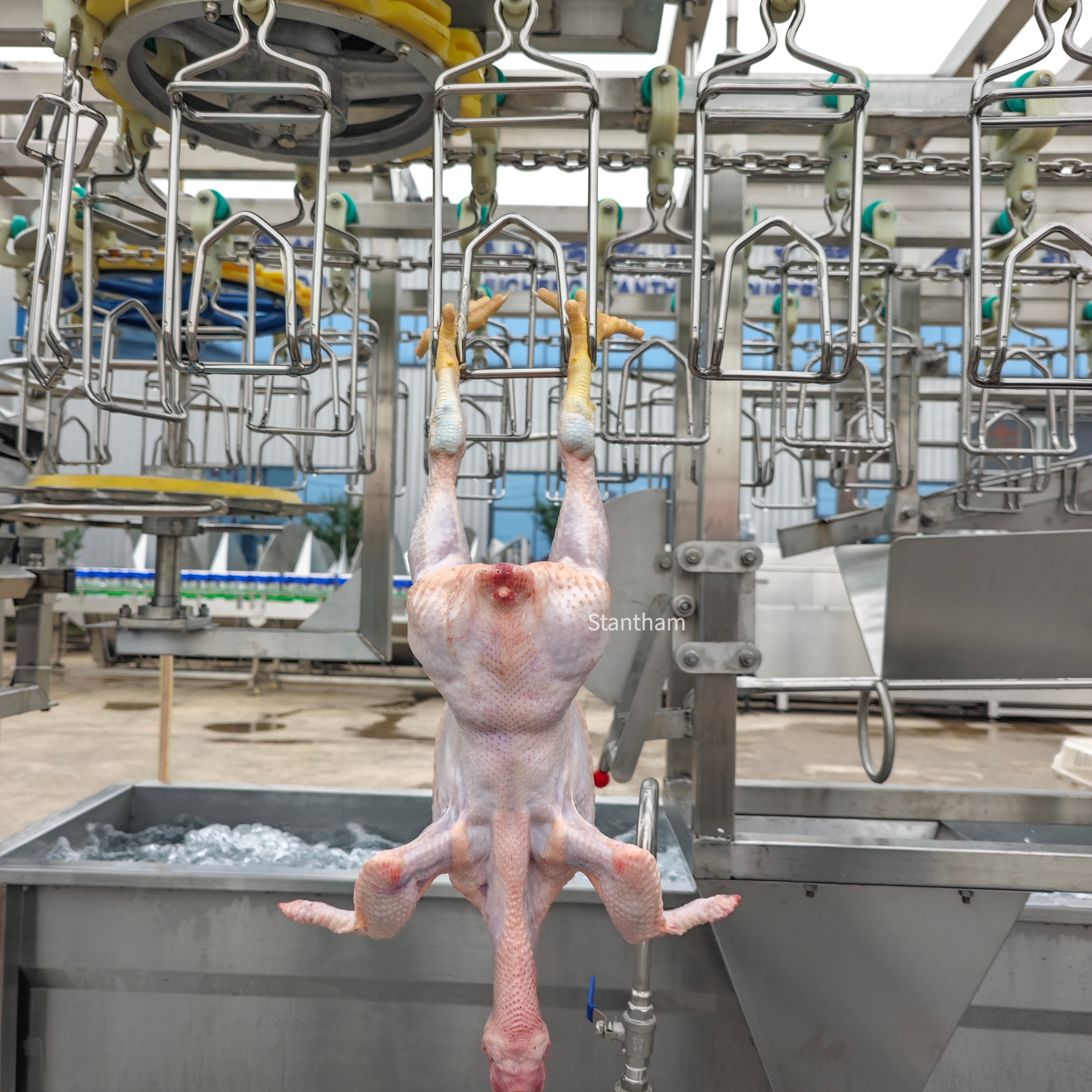
Respiratory Hazards Unique to the Poultry Slaughterhouse Environment
Airborne Contaminants: Organic dust, ammonia, hydrogen sulfide, and disinfectant vapors
Poultry slaughterhouses generate a complex mix of airborne hazards. Organic dust—composed of feather fragments, skin particles, dried feces, and feed residues—carries bacteria, endotoxins, and fungi deep into the respiratory tract. Ammonia forms as uric acid in manure breaks down; concentrations rise rapidly in warm, humid processing areas. Hydrogen sulfide may be released from anaerobic waste pits or scalding tanks where organic matter decays. Disinfectant vapors—including those from chlorine, quaternary ammonium compounds, and peracetic acid—add another layer of respiratory irritation. Acute effects include coughing, wheezing, and throat or eye irritation. With repeated exposure, bronchial inflammation and heightened allergen sensitivity can develop. To protect lung function, the National Institute for Occupational Safety and Health (NIOSH) recommends maintaining ammonia exposure below 25 ppm over an eight-hour shift (NIOSH, 2019). Without effective ventilation, these agents combine into a persistent irritant burden that even high-efficiency respirators cannot fully mitigate—and at elevated concentrations, ammonia can deaden olfactory response, delaying hazard recognition.
Exposure Hotspots: Evisceration, scalding, and feather removal zones
Respiratory risk concentrates in specific operational zones. Feather removal generates heavy organic dust laden with microbes, while scalding tanks emit steam, volatile organic compounds, and aerosolized bacteria. Evisceration lines expose workers directly to intestinal contents—releasing ammonia and hydrogen sulfide at elevated rates. Inadequate air movement allows contaminants to linger at breathing height, especially under warm, humid conditions that prolong particle suspension and accelerate gas release. Workers stationed at evisceration may face ammonia peaks several times higher than background levels; scalding personnel commonly report nasal and ocular irritation within the first hour of a shift. These hotspots demand targeted local exhaust—not just general dilution—along with routine air monitoring to detect exposure spikes before chronic damage occurs.
How Effective Ventilation Mitigates Risk in a Poultry Slaughterhouse
In a poultry slaughterhouse, ventilation systems must simultaneously manage organic dust, water vapor, ammonia, bioaerosols, and chemical vapors. Well-designed systems lower inhaled irritants and maintain air exchange within occupational health limits.
Dilution ventilation vs. local exhaust: When each strategy is most effective
Dilution ventilation reduces average contaminant concentrations across large spaces using high-volume airflow—ideal for open, dynamic areas like receiving, carcass washing, and general processing floors. Roof-mounted supply fans and wall-mounted exhaust units help control background ammonia and humidity. But it’s ineffective near point sources: contaminants remain highly concentrated at their origin. Local exhaust ventilation captures emissions at the source, before they enter the breathing zone. Slotted hoods over evisceration lines, side-draft hoods near feather removal equipment, and push-pull systems above scalding tanks are proven controls. These work best when emissions are continuous, localized, and close to workers. A combined approach delivers optimal protection: local exhaust removes concentrated plumes from high-risk tasks, while dilution ventilation manages residual and intermittent emissions. Facility layout, thermal dynamics, and pressure differentials also shape system performance—negative pressure in live-bird receiving and positive pressure in finished-product zones prevent cross-contamination. Use local exhaust for defined sources; rely on dilution for ambient control.
Engineering controls that reduce airborne pathogen load and irritant concentration
Effective engineering controls operate as an integrated system: source capture, filtration, disinfection, and environmental management. High-efficiency particulate air (HEPA) or MERV-13+ filters on recirculated air remove feather fragments, dust, and droplet nuclei. Upper-room or in-duct ultraviolet germicidal irradiation (UVGI) can inactivate airborne pathogens—but only when lamps are properly shielded, maintained, and replaced on schedule. Cooling coils and drain pans require frequent cleaning to prevent biofilm formation and re-entrainment of microbes. Maintaining relative humidity between 40% and 60% reduces survival of many airborne pathogens and lessens mucosal drying and irritation. Airflow must follow a unidirectional “clean-to-dirty” path—never reversed—to avoid contaminating low-risk zones. Positive pressure in break rooms and inspection stations shields staff from process air. Low-pressure foam cleaning and automated floor trough flushing significantly reduce aerosol generation compared with high-pressure water spray. Verification through anemometer readings, static pressure checks, and periodic bioaerosol sampling ensures these controls remain effective over time—directly lowering microbial and chemical loads in the worker breathing zone.
Regulatory Compliance and Real-World Consequences of Inadequate Ventilation
OSHA and NIOSH findings: 62% of respiratory violation citations tied to ventilation failures (2020–2023)
From 2020 to 2023, OSHA and NIOSH enforcement data show that 62% of respiratory-related citations in poultry processing facilities stemmed directly from ventilation failures—not missing PPE or improper chemical handling. This underscores that inadequate air handling remains the dominant driver of regulatory noncompliance. In practice, underperforming systems allow organic dust, ammonia, hydrogen sulfide, and disinfectant vapors to exceed permissible exposure limits. Common root causes include clogged ductwork, undersized exhaust fans, infrequent filter replacement, and lack of scheduled maintenance. These deficiencies are most acute in evisceration, scalding, and feather removal zones—where high humidity and biological loading strain system capacity. Regulators routinely examine maintenance logs, airflow measurements, and commissioning records; persistent violations often reflect gaps in testing protocols and preventive upkeep. Compliance therefore hinges not only on initial design but on disciplined, documented operational stewardship.
Chronic health impacts: Work-related asthma and mucosal damage from sustained organic dust exposure
Sustained exposure to organic dust in poultry slaughterhouses leads to progressive, often irreversible respiratory harm. Work-related asthma—triggered by endotoxins, feather antigens, and fungal spores—is the most frequently diagnosed chronic condition. Mucosal damage in the eyes, nose, and upper airways typically precedes asthma onset, accelerated by ammonia and disinfectant vapors that deplete protective epithelial moisture. Long-term occupational surveillance consistently links prolonged organic dust exposure to persistent cough, bronchial hyperresponsiveness, and measurable declines in lung function—effects that rarely resolve fully after job separation. Because chronic disease develops insidiously over months or years, absence of acute symptoms does not indicate safety. Preventive ventilation—designed, verified, and maintained to continuously reduce exposure—is the only reliable primary intervention against long-term impairment.
FAQ
What are the main respiratory hazards in a poultry slaughterhouse?
The primary respiratory hazards include organic dust, ammonia, hydrogen sulfide, and disinfectant vapors. These airborne contaminants can cause coughing, wheezing, throat and eye irritation, and chronic respiratory conditions like bronchial inflammation.
Which areas of a poultry slaughterhouse pose the highest respiratory risks?
Exposure hotspots include evisceration, scalding, and feather removal zones. These areas generate high levels of organic dust and harmful gases like ammonia and hydrogen sulfide, which can linger due to inadequate ventilation.
How can ventilation systems mitigate risks in poultry slaughterhouses?
Effective ventilation combines dilution ventilation to manage background contaminants and local exhaust systems to capture emissions at the source. High-efficiency particulate air (HEPA) filters and ultraviolet germicidal irradiation (UVGI) systems help reduce airborne pathogen loads.
What regulations govern respiratory safety in poultry slaughterhouses?
OSHA and NIOSH set permissible exposure limits (PELs) for contaminants like ammonia and hydrogen sulfide. Properly designed and maintained ventilation systems are critical to compliance, as undersized or clogged systems often result in violations.
What long-term health issues arise from inadequate ventilation in poultry slaughterhouses?
Prolonged exposure to organic dust can lead to conditions like work-related asthma, persistent cough, and mucosal damage. Chronic exposure to substances like ammonia and disinfectant vapors exacerbates these problems.
Table of Contents
- Respiratory Hazards Unique to the Poultry Slaughterhouse Environment
- How Effective Ventilation Mitigates Risk in a Poultry Slaughterhouse
- Regulatory Compliance and Real-World Consequences of Inadequate Ventilation
-
FAQ
- What are the main respiratory hazards in a poultry slaughterhouse?
- Which areas of a poultry slaughterhouse pose the highest respiratory risks?
- How can ventilation systems mitigate risks in poultry slaughterhouses?
- What regulations govern respiratory safety in poultry slaughterhouses?
- What long-term health issues arise from inadequate ventilation in poultry slaughterhouses?