 EN

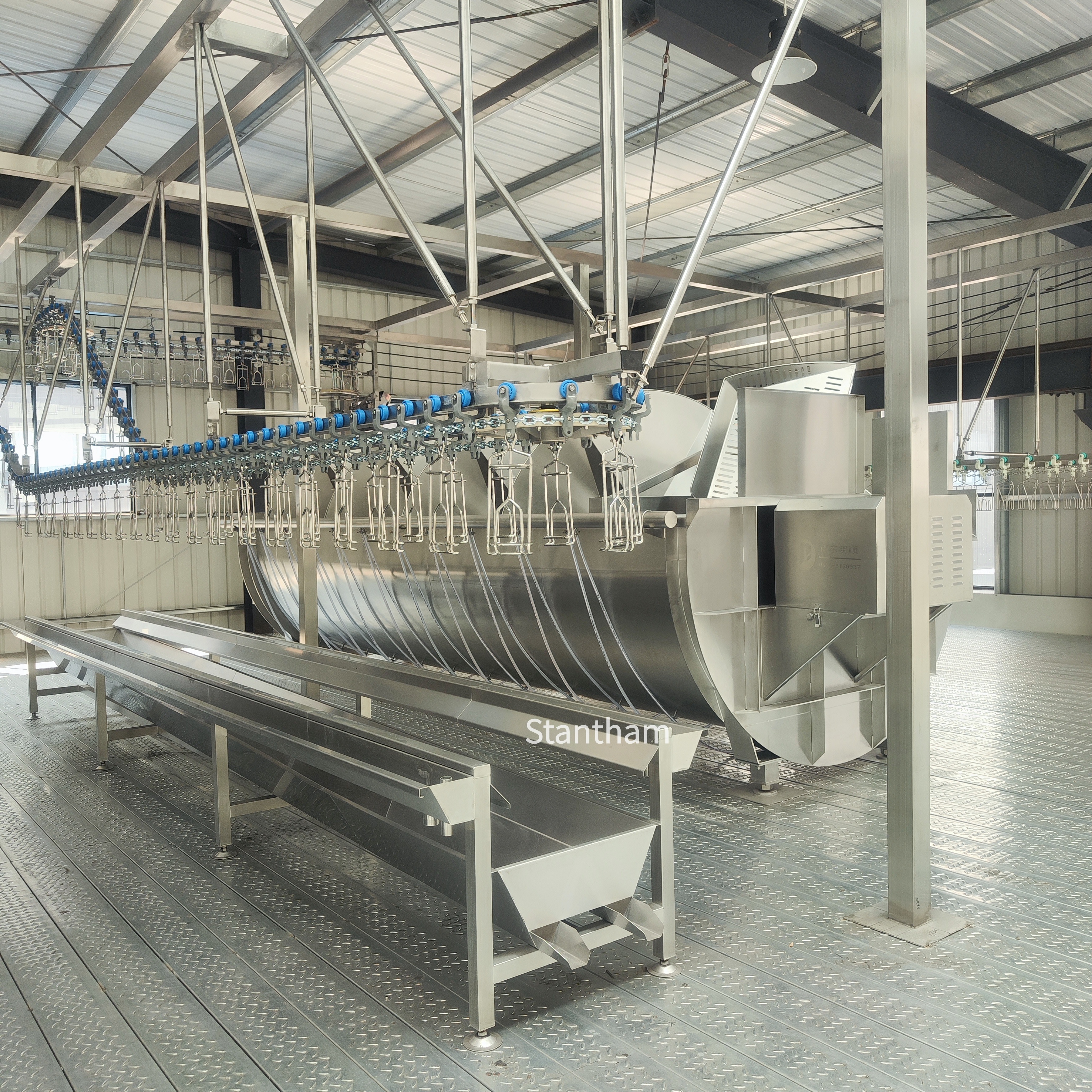
Core Components of Poultry Slaughter Equipment
The core components of poultry slaughter equipment determine line speed, hygiene, and humane handling. Each stage must operate as one continuous system—from stunning through bleeding—to ensure consistency, welfare compliance, and food safety.
Stunning Systems: Electrical, Controlled Atmosphere (CAS), and Water Bath Options
Electrical water bath stunning remains common in high-throughput plants due to its seamless integration with continuous shackle lines. Controlled atmosphere stunning (CAS) has gained adoption because birds remain in transport crates, reducing pre-slaughter stress, wing flapping, and associated carcass damage. CAS systems gradually introduce carbon dioxide or inert gases until birds lose consciousness—improving meat quality and enhancing worker safety by eliminating live-bird handling at the stun point.
Electrical system efficacy depends on water conductivity, electrode placement, current frequency (typically 50–1500 Hz), and line speed. Higher frequencies may reduce carcass defects in some trials, per the European Food Safety Authority (EFSA) 2019 assessment. Routine voltage checks and contact-point inspections prevent ineffective stuns, broken wings, and red wing tips. Consistent bird presentation is essential to avoid pre-stun shocks in water bath systems. Ultimately, selecting among electrical, CAS, or water bath options requires balancing throughput goals, animal welfare outcomes, and capital investment.
Killing and Bleeding Stations with Automation and Hygiene Integration
Automated killing and bleeding stations synchronize precisely with shackle speed to deliver a consistent unilateral neck cut—severing major blood vessels while avoiding the trachea. This supports efficient bleed-out and minimizes red carcass defects. Manual cutting remains necessary for Halal or Kosher compliance when performed by certified, trained staff under strict supervision.
Bleeding tunnels hold birds for 90–150 seconds to ensure adequate blood loss before scalding. Stainless steel contact surfaces, sloped drainage, and automated wash-down cycles limit biofilm formation. Blade sanitizing systems activate between birds, and height-adjustable blades accommodate varying bird sizes. Automated shackle cleaning beneath the bleed rail prevents debris accumulation that could compromise downstream hygiene. Because residual blood serves as a potent growth medium for pathogens, these integrated hygiene features transform a basic step into a controlled, food-safety-critical process—safeguarding both product integrity and line uptime.
Key Automation and Efficiency Features in Modern Poultry Slaughter Equipment
Conveyor Integration and Line Speed Optimization
Conveyor integration unifies stunning, bleeding, scalding, and evisceration into a single, synchronized flow. Automated overhead shackles and belt systems maintain even bird spacing—reducing manual transfers and cross-contamination risk. Operators adjust line speed in real time to align with downstream chilling and cut-up capacity, preventing bottlenecks and idle stations. Variable frequency drives and servo-controlled motors enable smooth acceleration and braking, preserving carcass quality and lowering ergonomic strain on workers. Integrated traceability systems retain batch identity from intake to final inspection. When optimized, line speed increases throughput without added labor—and regular review of conveyor load and speed settings helps surface minor inefficiencies before they escalate into costly downtime.
Real-Time Monitoring and IoT-Enabled Performance Tracking
Modern control systems use IoT sensors to monitor line speed, motor temperature, water flow, and energy consumption continuously. Supervisors access live dashboards and receive automated alerts when parameters deviate from set thresholds. Predictive maintenance algorithms analyze trend data to schedule repairs proactively—extending equipment life and avoiding unplanned stoppages. Cloud-based logs capture sanitation cycle completion, hourly throughput, and chilling temperatures, streamlining quality audits and regulatory reporting. This eliminates reliance on manual paper records while enabling faster responses to deviations, reduced waste, and consistently documented compliance.
Food Safety and Regulatory Compliance Built into Poultry Slaughter Equipment
Stainless Steel Construction and Clean-in-Place (CIP) Compatibility
Food-grade stainless steel—primarily grades 304 and 316—is standard for all product-contact surfaces in modern poultry slaughter equipment. It resists corrosion, endures high-pressure washdowns, and inhibits biofilm formation in wet processing environments. Clean-in-Place (CIP) systems circulate detergents and sanitizers through internal pathways without full disassembly, significantly reducing manual intervention and cross-contamination risk. Smooth welds, rounded corners, and sloped surfaces enhance drainage and shorten sanitation cycles—supporting daily hygiene rigor while minimizing operational downtime.
Meeting USDA, EU, and Halal/Kosher Certification Requirements
Regulatory compliance is embedded in equipment design—not layered on after installation. USDA and EU regulations emphasize sanitary operation, chemical residue control, and welfare-aligned stunning and bleeding protocols. Halal and Kosher certification demands dedicated tooling, operator training, and verifiable segregation—supported by adjustable blade positioning, single-bird handling capability, and full batch traceability. Cleanable surfaces, validated sanitation logs, and material certifications (e.g., FDA-compliant gaskets, NSF-listed components) help facilities pass rigorous audits. Buyers should verify that conveyor speeds, water temperatures, blade maintenance intervals, and software logging functions align with applicable regional or religious standards before commissioning.
Selecting the Right Poultry Slaughter Equipment for Your Plant Scale and Output
Choosing appropriate poultry slaughter equipment begins with matching line speed and bird size to daily throughput targets. Small operations processing under 5,000 birds per day often achieve better yield and ROI with modular, manually assisted stations that limit initial capital outlay. Mid-size plants (5,000–15,000 birds per shift) typically benefit from semi-automated stunning, killing, and bleeding lines—improving consistency and reducing variability without requiring full IoT infrastructure. Large-scale facilities exceeding 15,000 birds per shift should prioritize fully automated systems with conveyor synchronization, real-time monitoring, and CIP compatibility to sustain hygienic uptime and meet stringent audit requirements.
Before finalizing equipment, evaluate utility demand, spare parts availability, and ease of sanitation access—a high-output line crippled by frequent breakdowns or prolonged clean-downs will erode net throughput. Compare stainless steel gauge thickness, motor duty cycles, and control system scalability against your projected five-year volume. Plant layout and ceiling height also influence whether compact floor-level or overhead rail systems are feasible. Request vendors’ documented cycle times and third-party compliance certificates for USDA, EU, or religious processing standards. A well-matched system balances capital efficiency with long-term reliability—reducing labor strain, minimizing waste, and protecting food safety margins across every production tier.
FAQs
Why is stunning equipment important in poultry slaughter?
Stunning equipment ensures humane handling and improves meat quality by minimizing pre-slaughter stress, which can lead to carcass defects.
How does automation improve poultry slaughter processes?
Automation increases efficiency by synchronizing tasks, reducing manual intervention, and minimizing cross-contamination risks, while allowing real-time performance monitoring.
What certifications should poultry slaughter equipment meet?
Equipment should comply with USDA, EU, and, where applicable, Halal/Kosher standards, including sanitary operation and welfare-aligned protocols.
What factors determine equipment selection for different plant sizes?
Factors include daily throughput targets, bird size, regulatory requirements, and the level of automation needed to optimize efficiency and reliability.
How do Clean-in-Place (CIP) systems enhance food safety?
CIP systems clean internal pathways without disassembly, reducing the risk of cross-contamination and minimizing downtime during sanitation cycles.
Table of Contents
- Core Components of Poultry Slaughter Equipment
- Key Automation and Efficiency Features in Modern Poultry Slaughter Equipment
- Food Safety and Regulatory Compliance Built into Poultry Slaughter Equipment
- Selecting the Right Poultry Slaughter Equipment for Your Plant Scale and Output
-
FAQs
- Why is stunning equipment important in poultry slaughter?
- How does automation improve poultry slaughter processes?
- What certifications should poultry slaughter equipment meet?
- What factors determine equipment selection for different plant sizes?
- How do Clean-in-Place (CIP) systems enhance food safety?