 EN

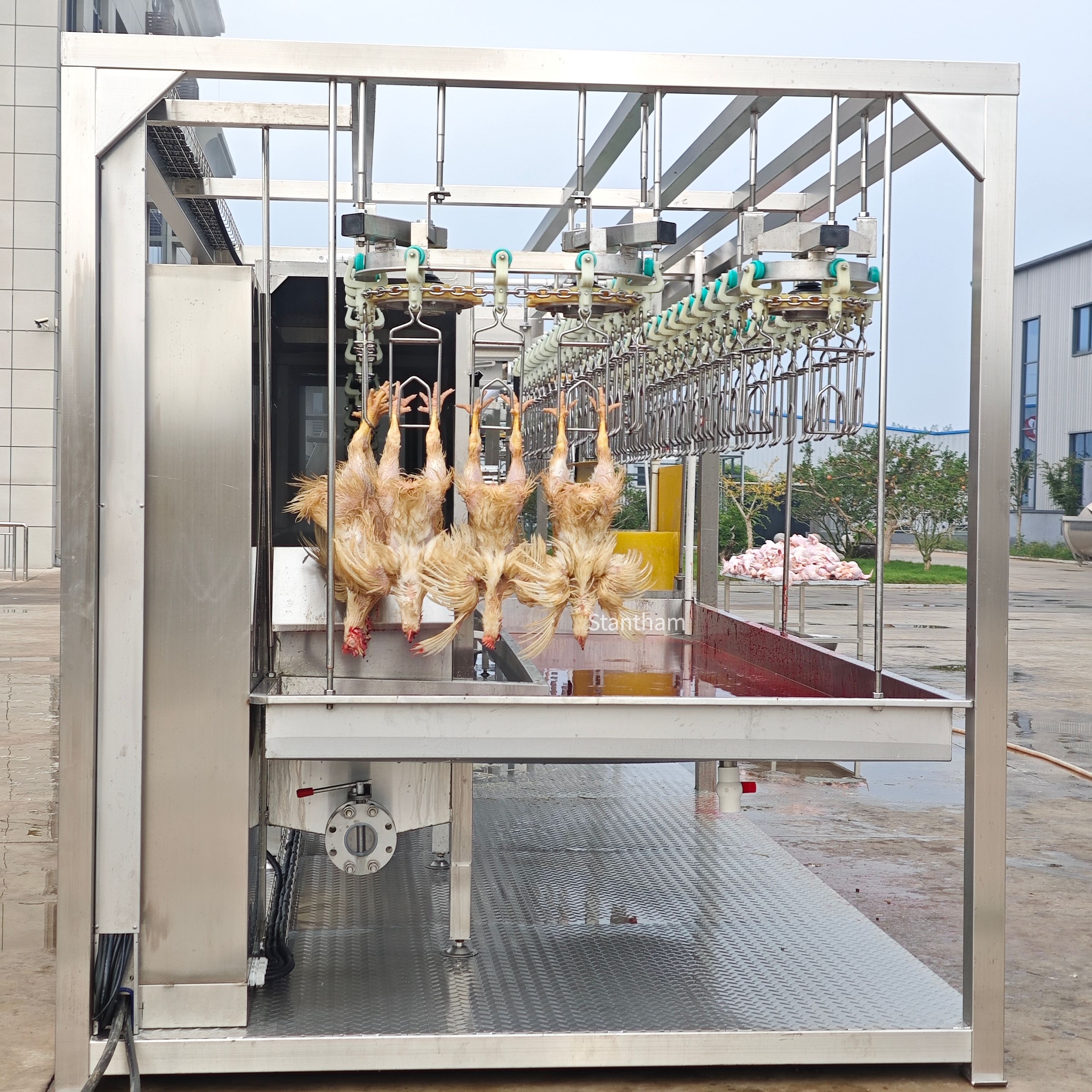
Foundations: Key Components, Hazards, and Regulatory Requirements for Chicken Slaughter Equipment
Core machinery overview: stunning, scalding, defeathering, evisceration, and chilling systems
A modern chicken slaughter line begins with a stunning system—typically electrical water-bath stunners or controlled-atmosphere cabinets—that renders birds insensible in compliance with animal welfare standards. Scalding tanks then circulate hot water at precisely controlled temperatures (50–63 °C) to loosen feathers without damaging the skin. Defeathering machines use rotating rubber fingers; worn or misaligned fingers risk bruising or incomplete plucking, making routine inspection essential. Evisceration systems automate abdominal opening and viscera removal using synchronized tooling to minimize carcass trauma. Finally, chilling—via immersion chillers or air-chill tunnels—reduces carcass temperature to ≤4.4 °C (40 °F) within mandated timeframes to suppress microbial growth. All equipment must adhere to sanitary design principles (e.g., USDA-FSIS 9 CFR Part 416) and undergo scheduled component verification to ensure consistent safety and performance.
Top operational hazards—and how they relate to chicken slaughter equipment safety failures
The poultry processing industry reports injury rates exceeding 5.0 per 100 full-time workers (U.S. Bureau of Labor Statistics, 2022), with machine-related incidents among the most common. Entanglement in unguarded defeathering discs or evisceration conveyors remains a leading cause of amputation. Burns from scalding water or caustic cleaning agents often stem from failed automatic shut-offs or bypassed temperature interlocks. Lacerations from evisceration blades increase when guard panels are removed for sanitation and not reinstalled correctly. Slips on wet, protein-laden floors further elevate the risk of contact with moving machinery. These patterns frequently reflect systemic gaps—particularly in lockout/tagout execution, inconsistent preventive maintenance, or guarding that falls short of OSHA’s requirements under 29 CFR 1910 Subpart O. Engineering controls—such as light curtains, fixed barriers, and fail-safe interlocks—combined with verified operator training, significantly reduce both injury frequency and unplanned downtime.
Mandatory compliance: USDA‑FSIS, OSHA Poultry Standards, and HACCP‑aligned recordkeeping
Hazard Analysis Critical Control Point (HACCP) plans form the regulatory foundation for all USDA-FSIS-inspected establishments. Each plan must define critical limits—including chiller water temperature ≤40 °F, absence of visible fecal contamination, and validated stunner parameters—and document corrective actions when deviations occur. OSHA’s poultry processing standards (29 CFR 1910) mandate machine guarding, formal lockout/tagout programs, and appropriate personal protective equipment for personnel operating chicken slaughter equipment. A unified recordkeeping system integrates these requirements: daily checklists verify stunner voltage, scalder water exchange rates, and evisceration tool sanitization against HACCP thresholds, while maintenance logs track guarding integrity, emergency-stop functionality, and calibration of temperature and timing sensors. Regulators may request these records at any time; consistent, contemporaneous documentation satisfies legal obligations and establishes a defensible due-diligence posture during audits, investigations, or recalls.
Building Competency: A Phased Training Framework for Chicken Slaughter Equipment Operators
A structured, phased approach to workforce development closes skill gaps and reduces risk. Moving operators from foundational theory through supervised practice to verified independence ensures safe, efficient, and compliant operation of the processing line.
Phase 1: Classroom instruction on equipment functions, lockout/tagout, and emergency shutdowns
Operators begin with instructor-led sessions covering the full sequence of chicken slaughter equipment—from stunning and scalding to evisceration and chilling—with emphasis on energy isolation principles. Trainees learn OSHA’s lockout/tagout (LOTO) requirements (29 CFR 1910.147), including identification of hazardous energy sources, verification of zero-energy states, and execution of emergency shutdowns within seconds. Visual job aids highlight pull-cord and emergency-button locations to build muscle memory before live-line exposure. A written assessment confirms mastery of safety protocols and machine-stopping sequences prior to advancement.
Phase 2: Supervised hands-on practice with real-time coaching on chicken slaughter equipment workflows
Under direct mentorship, new operators perform repetitive tasks across the line while receiving immediate, corrective feedback. Coaches focus on ergonomically sound hand placement, precise tool handling, and sustainable throughput pacing—intervening instantly when safety lapses occur. Real-time guidance on evisceration tool angle or scalding bath entry timing prevents early-career errors. Short daily huddles review observed missteps, converting each incident into a targeted learning opportunity. Operators log supervised hours, and progression to independent practice occurs only after consistently demonstrating all skills on a pre-defined checklist covering every machine touchpoint.
Phase 3: Independent operation with competency validation and documented skill sign-off
Once readiness is confirmed by the mentor, the operator completes a full shift autonomously while a supervisor conducts periodic, unannounced observations. A standardized competency checklist—aligned with HACCP recordkeeping and OSHA compliance criteria—evaluates safety adherence, equipment handling accuracy, and output quality. Each item requires dual signature: evaluator and trainee. This signed validation becomes part of the official personnel training record, providing auditable proof of proficiency for internal reviews and USDA-FSIS or OSHA inspections.
Sustaining Performance: Ergonomics, Feedback Systems, and Continuous Improvement for Chicken Slaughter Equipment Teams
Sustaining high performance demands more than initial training. For teams running chicken slaughter equipment, daily physical strain, task monotony, and subtle process drift erode both safety and throughput. A two-pronged strategy—ergonomic interventions that protect the body and real-time monitoring that detects errors before consequences arise—builds resilience and self-correction into daily operations. This integrated approach reduces downtime, prevents injuries, and supports consistent, humane, and compliant performance.
Ergonomic workstation adjustments to reduce repetitive strain and fatigue-related errors
Repetitive motions—knife gripping, reaching across conveyors, prolonged standing—contribute to fatigue that increases slips, missed steps, and errors near fast-moving equipment. Adjustable-height platforms support neutral wrist and spinal alignment. Anti-fatigue mats mitigate concrete-floor impact, while mechanical assists reduce manual lifting of carcasses or bins. Rotating staff across stations every two hours distributes physical demand and limits cumulative strain on specific muscle groups. These evidence-informed adjustments directly lower the incidence of musculoskeletal injuries and operator-induced line disruptions.
Real-time monitoring tools (e.g., sensor alerts, digital SOP checklists) for proactive error prevention
Modern lines embed intelligence to detect and prevent issues before they escalate. Light curtains and thermal sensors automatically halt equipment upon intrusion into hazardous zones; vibration monitors identify bearing wear before failure. Digital standard-operating-procedure checklists on shop-floor tablets guide start-up, sanitation, and calibration steps—blocking progression until each step is confirmed. When critical parameters drift—such as scalder temperature, chilling dwell time, or stunner amperage—an alert notifies both operator and supervisor. This closed-loop system transforms every shift into a continuous feedback cycle, enabling rapid root-cause analysis and data-driven refinement of procedures, training, and equipment settings.
FAQ Section
What are the core components of a chicken slaughter line?
The core components include stunning systems, scalding tanks, defeathering machines, evisceration systems, and chilling systems. Each plays a critical role in ensuring humane and efficient processing while adhering to regulatory standards.
How can equipment hazards be minimized in poultry processing plants?
Hazards can be minimized by implementing engineering controls such as light curtains and barriers, conducting regular maintenance, enforcing lockout/tagout procedures, and ensuring proper operator training.
What are the key regulatory requirements for chicken slaughter equipment?
USDA-FSIS regulations require HACCP plans, adherence to sanitary design principles, and scheduled component verification. OSHA mandates machine guarding, lockout/tagout programs, and personal protective equipment for equipment operators.
Why is ergonomics important in chicken slaughter operations?
Ergonomic adaptations, like adjustable platforms and anti-fatigue mats, reduce operator strain and prevent errors. Rotating staff across stations also mitigates repetitive strain injuries, ensuring sustainable performance.
How does real-time monitoring improve processing safety?
Real-time systems use alerts and sensors to detect safety risks and deviations in critical parameters, enabling preemptive corrective actions and supporting continuous improvement efforts.
Table of Contents
- Foundations: Key Components, Hazards, and Regulatory Requirements for Chicken Slaughter Equipment
- Building Competency: A Phased Training Framework for Chicken Slaughter Equipment Operators
- Sustaining Performance: Ergonomics, Feedback Systems, and Continuous Improvement for Chicken Slaughter Equipment Teams
-
FAQ Section
- What are the core components of a chicken slaughter line?
- How can equipment hazards be minimized in poultry processing plants?
- What are the key regulatory requirements for chicken slaughter equipment?
- Why is ergonomics important in chicken slaughter operations?
- How does real-time monitoring improve processing safety?