 EN

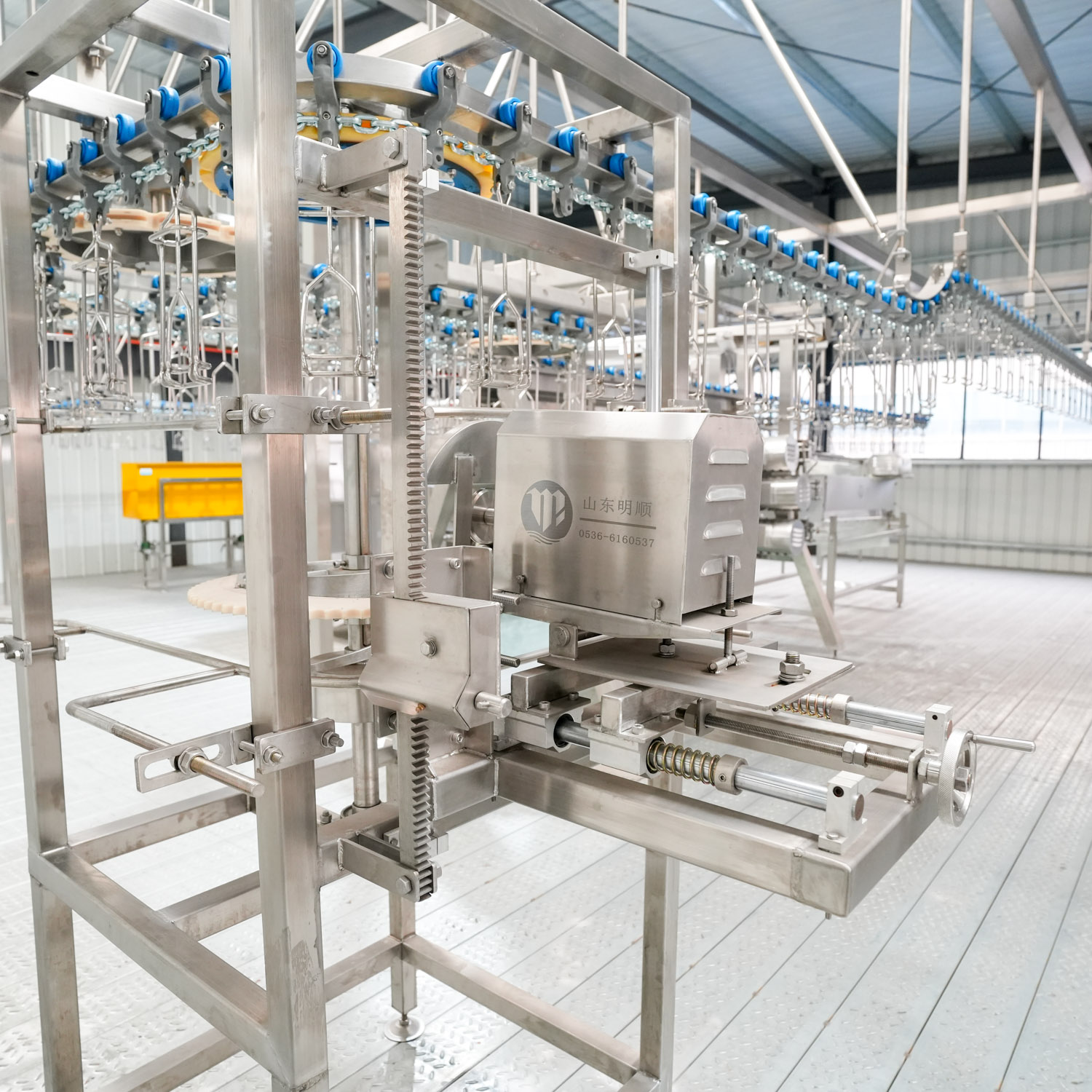
The Ergonomic Burden of Manual Poultry Slaughter
In manual poultry slaughter, workers repeat the same cut, grasp, or pull every few seconds for an entire shift. On a high-speed evisceration line, a single employee may perform more than 20,000 wrist and hand movements per day. This repetition—combined with forceful gripping of knives and scissors—places sustained stress on tendons, nerves, and muscles. Awkward postures compound the risk: workers often stand with flexed necks, raised shoulders, and bent wrists while reaching into carcasses. Cold processing temperatures further reduce hand blood flow and tissue flexibility, while dull tools force greater exertion.
These conditions drive high rates of repetitive strain injuries (RSIs), including carpal tunnel syndrome, tendinitis, and epicondylitis. OSHA’s National Emphasis Program has repeatedly identified poultry processing as having among the highest rates of repetitive motion injuries in all of manufacturing (OSHA, 2023). Early symptoms—numbness, tingling, pain, and loss of grip strength—often appear within months. Yet production incentives tied to line speed and piece-rate pay may discourage early reporting, delaying documentation until significant functional loss occurs. The resulting ergonomic burden increases turnover, training costs, and workers’ compensation claims—making RSI reduction not just a safety imperative, but a strategic operational priority.
Key Poultry Slaughter Automation Technologies That Eliminate High-Risk Tasks
Automated poultry slaughter systems now target the most injury-prone tasks: live bird handling, stunning, carcass splitting, and evisceration. These technologies replace high-force, high-repetition manual motions with machine-driven precision—reducing repetitive strain injuries (RSIs) and shifting workers from cutting and lifting to supervision, quality assurance, and maintenance.
Robotic Depopulation and Conveyor-Integrated Stunning Systems
Robotic depopulation eliminates the need for workers to repeatedly grasp, lift, and hang live birds. Automated modules collect birds from transport drawers and place them onto conveyor lines. Conveyor-integrated stunning then uses controlled electrical or gas systems to render birds insensible before shackling. This sequence removes two major ergonomic hazards: wrist strain from manual hanging and shoulder strain from overhead reaching. Manual hanging requires hundreds of repetitive lifts per shift; automation removes that cycle entirely. Fewer twisting and lifting cycles also reduce fatigue-related errors—lowering risks of cuts and slips.
Vision-Guided Carcass Splitting and Precision Evisceration Robots
Vision-guided robots perform carcass splitting and organ removal with consistent, anatomically precise tool paths. Cameras and sensors locate joints and organs, enabling blades to follow natural contours without relying on worker force. This reduces knife-handling repetition, awkward postures, and laceration risk. Precision evisceration robots extract viscera without requiring workers to reach into carcasses. Enclosed stations separate employees from sharp edges and biological splatter. Workers instead monitor equipment, inspect output, and perform maintenance—tasks that demand skill and attention but impose far less physical strain. By moving high-cycle operations to machines, facilities significantly lower hand and wrist RSI exposure while maintaining throughput.
| High-risk manual task | Automated alternative |
|---|---|
| Live bird hanging and lifting | Robotic depopulation and conveyor transfer |
| Manual stunning | Conveyor-integrated electrical or gas stunning |
| Carcass splitting | Vision-guided robotic splitting |
| Evisceration | Precision evisceration robots |
Measurable Worker Safety Improvements from Poultry Slaughter Automation
Safety improvements from automation in poultry slaughter are quantifiable through OSHA recordkeeping, injury logs, and workers’ compensation data. Repetitive strain injuries—including carpal tunnel syndrome, tendinitis, and rotator cuff damage—have long dominated injury reports on manual processing lines. Automation directly reduces the high-force, high-frequency motions that drive these soft-tissue injuries: hanging live birds, cutting joints, and pulling viscera.
OSHA Data: 37% Reduction in RSI Incidence After Automation Deployment
Facilities that deployed robotic cutting and automated transfer systems reported a 37% reduction in RSI incidence within the first 12 months, according to OSHA recordkeeping data (2023). Upper-extremity injuries fell from 8.1 to 5.1 per 100 full-time workers, while lost-workday cases dropped by 28% over the same period. Wrist and shoulder conditions—most closely linked to repeated knife strokes and overhead hanging—showed the largest declines. Automated equipment performs those cuts without fatigue or awkward wrist angles, while workers transition to monitoring, sanitation, and quality inspection roles. These positions involve lower peak force and fewer repetitive motions—sustaining the injury reduction. Task reallocation is widely cited as the primary mechanism behind improved outcomes.
Balancing Safety Gains with Workforce Transition in Poultry Slaughter Facilities
Automation delivers clear ergonomic benefits—but it transforms job roles rather than eliminating them outright. Facilities should pair technology adoption with structured reskilling programs that move workers from high-strain cutting tasks to equipment monitoring, quality inspection, and maintenance support. This approach retains experienced staff who understand food safety protocols and line dynamics. While short-term productivity may dip during training, long-term reductions in injury-related turnover and workers’ compensation costs deliver measurable ROI. Transparent communication about role evolution builds trust and reduces resistance. Managers can phase in automated modules—starting with depopulation or evisceration stations where RSIs are most prevalent—allowing operators time to adapt and training teams to build competency incrementally. In this way, poultry slaughter automation advances both worker health and operational continuity—without abrupt workforce displacement.
FAQ
What are the main repetitive strain injuries (RSIs) in poultry slaughter?
Common RSIs in poultry slaughter include carpal tunnel syndrome, tendinitis, and epicondylitis, often caused by repetitive wrist and hand movements, forceful gripping, and awkward postures.
How does automation reduce repetitive strain injuries?
Automation replaces high-force and high-repetition manual tasks with machine-driven precision, reducing physical strain on workers. Tasks like bird handling, stunning, carcass splitting, and evisceration can be performed by machines.
What are some automated technologies used in poultry slaughter?
Key technologies include robotic depopulation, conveyor-integrated stunning systems, vision-guided carcass splitting robots, and precision evisceration robots. These tools minimize the need for manual, high-risk tasks.
What kind of safety improvements have been reported after implementing automation?
Facilities using automation have seen a 37% reduction in repetitive strain injuries, with fewer upper-extremity injuries and lost-workday cases according to OSHA data.
How can facilities manage workforce transitions when adopting automation?
By implementing structured training programs, facilities can reskill workers for roles like monitoring, inspection, and maintenance, ensuring job retention and smoother operational transitions.